West End, Queensland, Australia
West End occupies the river-bound peninsula of Kurilpa, south of Brisbane's city centre. It began as a fishing and meeting ground of the Turrbal and Jagera peoples, and later became a district of market gardens, foundries and workers' cottages. After the Second World War it turned Greek, Italian and Yugoslav, and in the 1980s cheap rents brought artists and activists. The suburb that followed was crowded, contested and politically loud, flooded by the river and squeezed by developers, and never fully tamed by either.
Kurilpa
West End sits on a broad, low peninsula pushed out by a long southern bend of the Brisbane River, opposite the city centre and the Botanic Gardens. Before European settlement the land was known as Kurilpa, generally rendered as the place of the water rat, and it formed part of the country of the Turrbal and Jagera peoples. The river flats offered fish, shellfish and waterbirds, and the higher ground towards what became Highgate Hill gave a view across the reaches. Groups travelling along the river met there to trade, settle disputes and hold ceremony.
Colonisation reached the peninsula in the 1840s, once the Moreton Bay penal settlement was opened to free settlers. The newcomers cleared the riverbank timber and took up the flats for farming. Aboriginal people did not disappear from Kurilpa, but their presence was policed. The road that became Boundary Street took its name, according to long local tradition, from a line Aboriginal people were not permitted to cross into the town after dark. That tradition was repeated in West End for more than a century, and the street's name kept the memory of the exclusion in daily use long after the rule itself had lapsed.
The connection never broke. Musgrave Park, on the suburb's northern edge, remained a gathering place for Aboriginal and Torres Strait Islander people from across south-east Queensland. Through the twentieth century it served as a camping ground for families coming to the city, a meeting place, and eventually a site of protest.
Gardens on the Flats
The first European use of the peninsula was agricultural. The alluvial soil of the river bend was among the richest close to the town. From the 1860s Chinese gardeners leased much of it, working long, narrow plots of cabbages, beans, sweet potatoes and melons that were barrowed or carted to the markets across the river each morning. The largest of these operations belonged to Chan Wah Sing, who held leases along the river from the 1870s until his death in 1909. He employed as many as thirty men in the picking season, and his gardens supplied a substantial share of the town's green vegetables.
The gardeners lived on their plots in timber-and-iron huts and were viewed with suspicion by much of the European population. Their produce was bought eagerly and their presence resented in equal measure. A petition to the municipal council in 1888, signed by residents of the higher streets, complained of the smell of the nightsoil used as fertiliser and asked for the leases to be terminated. The council did nothing. By the turn of the century, rising land values were doing the work the petition had failed to do, and the gardens were giving way to houses.
The river that made the soil also took it back. The floods of 1893 put most of the low-lying peninsula under water, washing away gardens, huts and the timber cottages that had begun to spread across the flats. Several families lost everything they owned. The pattern was set early: West End was built on land the river considered its own, and every generation that lived there learnt it again.
Foundries, Ropeworks and Workers' Cottages
From the 1880s the riverside along Montague Road filled with industry. Sawmills came first, taking timber floated down the river. They were followed by tanneries, soap and candle works, a glassworks and, most enduringly, metalworking. Halloran Brothers' Foundry opened on Montague Road in 1886 and grew into the largest employer on the peninsula, casting pipes, pump housings and parts for the sugar mills of the north. The Kurilpa Ropeworks, founded in 1892 by Robert Tennant, a Dundee rope-maker, ran a rope walk more than two hundred metres long parallel to the river.
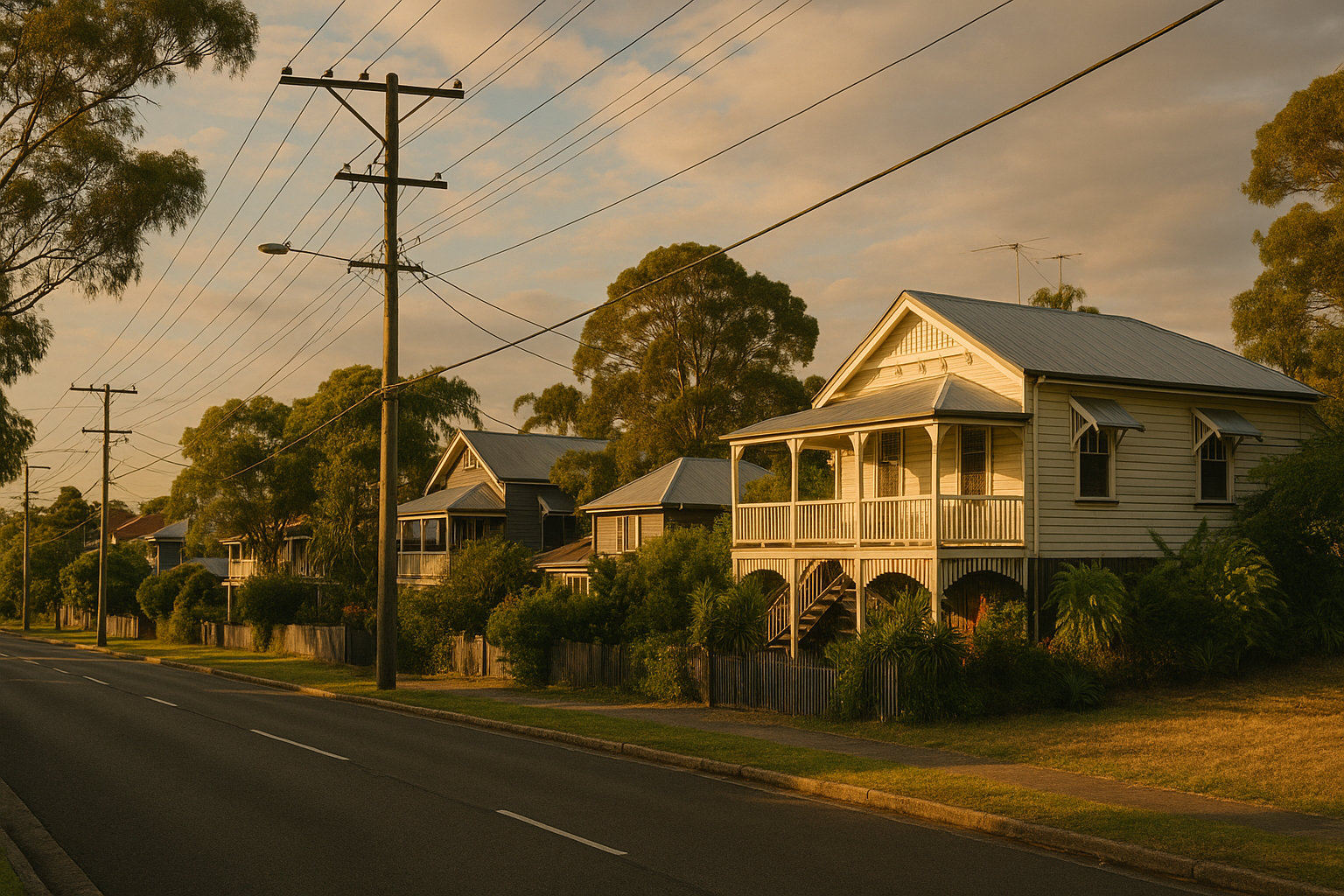
The workforce lived close by. Behind Montague Road and up the slopes towards Highgate Hill, the streets filled with small timber cottages and modest Queenslanders on stumps, many of them built by the workers themselves on narrow allotments. West End State School opened in 1875 and was enlarged repeatedly as families arrived. Its long-serving headmaster, Alfred Cosgrove, who ran the school from 1891 to 1922, recorded in his annual reports how many of his pupils had left before the age of twelve for work in the foundries and the ropeworks.
The tram line along Boundary Street, extended in the early years of the twentieth century, tied the suburb to the city and turned the street into its commercial spine. Bakeries, butchers, drapers, a picture theatre and a string of corner stores lined it. In 1907 Elena Papadopoulos, a young Greek widow who had arrived with her brother two years earlier, opened a fish café near the river end of Boundary Street. It fed foundry hands and wharf labourers for the next four decades. The café became the first fixed point of a Greek community that was then only a few dozen strong.
The Depression of the 1930s hit the suburb hard. Halloran Brothers laid off more than half of its men in 1931, and the ropeworks went to short time. Unemployed families crowded into rented rooms, and relief work gangs were put to clearing the riverbank. The Second World War reversed the decline. The foundries took government contracts for munitions components and ship fittings, the riverside slipways repaired small naval craft, and for a few years there was more work on the peninsula than there were people to do it.
The Migrant Suburb
The prosperity of the war years did not last, but the population that arrived after it changed West End permanently. Through the 1950s and 1960s the suburb took in large numbers of migrants from Greece, Italy and Yugoslavia. Many found work in the foundries and the remaining riverside industries, and they bought the cheap, worn cottages the earlier workforce was leaving for newer suburbs. The Greek community, built around the café families of the pre-war years, grew into one of the largest in Queensland. Its church, hall and community club made the streets around Boundary Street its centre.
The character of the suburb shifted with it. Continental delicatessens opened along Boundary Street and Hardgrave Road. Kostas Andreadis's delicatessen, opened in 1956, sold olives, feta and salted fish to customers who could not find them anywhere else in Brisbane. Backyards were turned over to tomatoes, figs and grapevines trained over the clothes line. In some years more than half the pupils at West End State School spoke a language other than English at home, and the school's teachers learnt to communicate with parents through older siblings.
Not every arrival was welcomed. Migrant families met hostility from some long-standing residents and from employers who paid them less for the same work. The Italian and Yugoslav communities, smaller than the Greek, kept largely to their own clubs and parishes. The suburb was multicultural long before the word was in use, but it was not always harmonious.
Industrial decline set in from the late 1960s. Freight moved to road and container, the timber trade dried up, and the riverside works closed one after another. Halloran Brothers shut its gates in 1971, after eighty-five years. The flood of January 1974 then swept through the low streets of the peninsula, filling houses to the ceilings and leaving a layer of silt across everything below the high-water mark. Many families who could afford to leave did so after the waters went down. Others stayed and rebuilt, and the empty houses were taken up as boarding houses and cheap rentals.
Musgrave Park and the Politics of the Peninsula
By the 1970s Musgrave Park had become a centre of Aboriginal political life in Brisbane, as well as a gathering place. Community organisations working on housing, health and legal aid set up in and around West End, drawn by cheap premises and by the park itself. When the Commonwealth Games came to Brisbane in 1982, Musgrave Park became the base for protests against Queensland's treatment of its Aboriginal people, and against the restrictions on public assembly then in force under the state government. The protests brought large numbers of police into the suburb and led to many arrests. They also fixed the park's place as a political as well as a social ground.
The protests left a mark on West End's sense of itself. Residents who had never thought of the suburb as political found themselves taking sides. By the end of the decade, a habit of public argument had become one of the things West End was known for.
Bohemia and Resistance
The cheap rents that followed the flood and the closure of the factories drew a new population in the late 1970s and the 1980s: students, artists, musicians and activists, many of them priced out of or bored by the newer suburbs. They shared the boarding houses and the Queenslanders with the remaining migrant families and pensioners, and they started cafés, bookshops, rehearsal rooms and food co-operatives along Boundary Street.
The painter Murray Kellerman, known to everyone as Muz, became the most visible figure of that era. His murals along Montague Road were political, crowded with figures and frequently painted over by property owners. Each time, he painted them again. The Saturday markets at Davies Park, which began in the early 1980s as a handful of migrant growers selling surplus produce, grew into a fixture that combined fruit and vegetable stalls with second-hand clothing, crafts and street performance.
The arrival of Expo 88 on the riverfront at South Bank, immediately to the north, put the suburb under new pressure. Boarding houses in South Brisbane and on the edge of West End were cleared in the years before the exposition to make way for accommodation and redevelopment. Long-term tenants, many of them elderly or poor, were evicted with little notice. In West End the response was organised resistance.
The Kurilpa Cottages Action Group, formed in 1986 by the schoolteacher Maureen Faulds, fought a proposal to demolish a row of nineteenth-century workers' cottages for a tower block. The campaign ran for two years, through council hearings, street meetings and a sit-in on the cottage verandahs. Part of the row was saved and part was lost, and the group went on to contest almost every major development proposal on the peninsula for the following decade. Its tactics became the template for West End activism: noisy, persistent and difficult for developers to ignore.
The early 1990s brought harder times. Heroin moved through the boarding houses and the streets behind Boundary Street, and the suburb saw overdoses, break-ins and needles in the parks. Long-standing residents spoke of a neighbourhood fraying. The Kurilpa Neighbourhood Centre, run through those years by the social worker Rhonda Steggall, ran a needle exchange, a soup kitchen and a tenancy advice service out of a converted shopfront. It was criticised from one side for encouraging the problem and from the other for doing too little about it. West End's reputation as the most interesting suburb in Brisbane and its reputation as one of the roughest grew at the same time.
Gentrification and Its Discontents
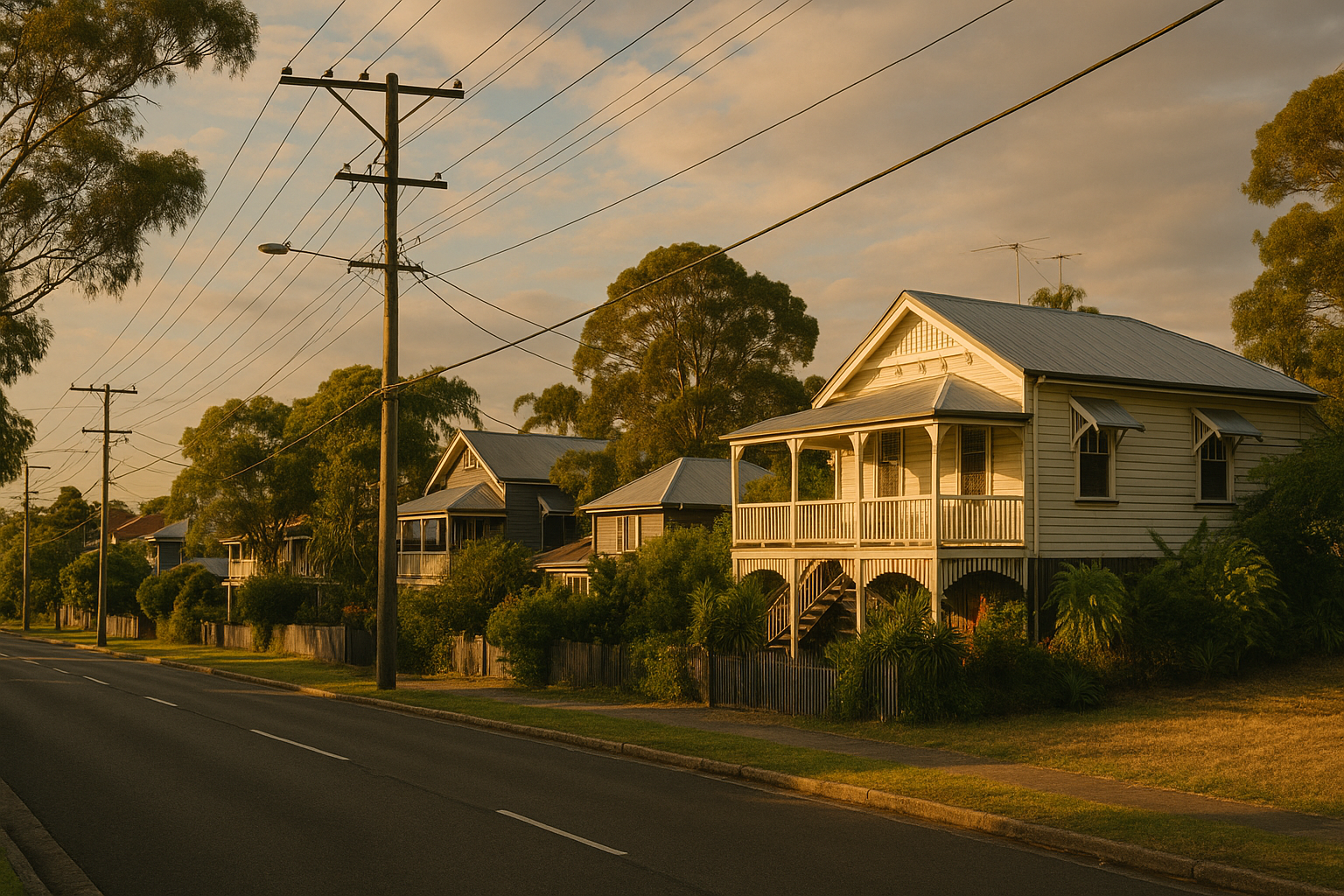
From the late 1990s the suburb's cultural reputation began to attract money. The old industrial sites along Montague Road were bought up and rezoned, and the first apartment buildings rose where the foundries had stood. Investors bought the Queenslanders that had housed share households and boarding tenants, renovated them and raised the rents. By the early 2000s, Boundary Street's cafés were drawing customers from across the city at weekends, and the street had acquired its first wine bars and design shops alongside the Greek delicatessens, op shops and the Davies Park market.
For a time the suburb held both populations at once. Old Queenslanders on the side streets were still rented out room by room to students, nurses, junior police officers and young tradesmen, who could afford West End only by sharing it. Their parties spilled out into backyards and down the back stairs on summer nights, a long-running source of complaint from the newer owner-occupiers next door. Greek widows who had lived in the same cottages for fifty years found themselves neighbours to architects.
The tensions were real and unresolved. Rents rose faster than the incomes of the people who had made the suburb what it was, and many of them left. The Kurilpa Cottages Action Group and the residents' associations that succeeded it fought density, height limits and the loss of affordable housing through the 2000s with mixed results. The river had its say again in January 2011, when floodwater came back through the low streets of the peninsula. It reached many of the same houses it had filled in 1974, and the new apartment blocks on Montague Road, whose basements and lower floors had been built on the same flats.
Character
By the second decade of the twenty-first century, West End was one of the most densely populated and most argued-over suburbs in Brisbane. Apartment towers stood along the river where the ropeworks and the foundries had been. The cottages on the slopes behind them, and the Queenslanders on their stumps, were preserved in some streets by heritage protection and in others by stubbornness. Boundary Street still ran from the river to the hill, mixing old delicatessens with new restaurants, and Musgrave Park still filled for gatherings, festivals and protests.
The suburb never settled into a single identity. It remained Aboriginal country, a former industrial district, a migrant neighbourhood, a bohemian refuge and an expensive inner-city address all at once, and none of those histories gave way entirely to the next. Residents argued about which of them mattered most. The argument itself became the most consistent part of West End's character.