4338.209 · July 28, 2018 AD
Some Things Refuse to Wake
In the stillness between sleep and morning, Sarah slips through a dream that feels like memory — Karl’s voice, his touch, the impossible promise of a life that might have been. But the illusion fractures into daylight and the quiet truth of her grandmother’s fading world. As she navigates the fragile hours between devotion and departure, Sarah finds that some ghosts — the living and the imagined — aren’t ready to let go.
"Dreams never end cleanly. They cling — to skin, to breath, to the corners of rooms that should be empty."
"Oh, Karl," I whispered, and the word barely carried. He stood in the doorway, lit from no source I could find — the glow seemed to come off his own skin, soft and silver, the way light only behaves in the places sleep builds for you. It blurred his edges and left him half-remembered, as though I’d assembled him out of every time I’d watched him across a briefing room and made myself stop. My heart was already ahead of me, already certain, surer of itself than I ever let it be awake.
His shirt hung open at the collar, two buttons gone, and the same silver light shifted over his chest as he breathed. I let myself look. Really look — the thing I never allowed awake, where a glance held half a second too long was something other people clocked and filed. Here there was no one to file it. My throat had gone dry, and the wanting wasn’t a wave or a rush of anything; it was simply there, out in the open at last, a fact I’d kept from myself too long.
"I’ve been waiting for you," he said, and even his voice was how I wanted it — low, unhurried, none of the flatness it carried by daylight.
I was lying down now — dreams move you without the walking — and the mattress took my weight as though it had been waiting too. Everywhere the sheet touched me I felt it, more than skin should manage, the whole surface of me turned up and listening. I’d spent years keeping this much of myself shut. The dream had simply opened it, like a window thrown up in a closed room.
The room had gone very quiet — the quiet I knew from interview rooms, the one that arrives just before somebody finally tells the truth. I could hear us both breathing, fallen into the same rhythm without trying, two people who had stopped needing to think around each other.
He came toward me and the room seemed to draw in around him, the corners closing. There was that contained grace I knew from him — but softened here, the set of his jaw easier, his mouth on the edge of a smile he’d never have allowed at work. The control was still there. It had just loosened its grip enough to let something through.
He crossed the floor without seeming to land on it, half-tethered, and stopped at the foot of the bed. His shadow climbed the wall ahead of him and bled across the ceiling, reaching for something just past the edge of the light. I forgot to breathe.
I ran my hands over myself and the touch felt borrowed, as if the body answering belonged to a version of me I only met asleep. Heat climbed my chest and up my neck. The cold air off the window pulled goosebumps after it, and I lay there caught between the two — the chill arriving, the warmth already there.
"Do I please you?" The question came out before I’d decided to ask it — too open, too undefended, something I’d never have handed anyone awake.
"Yes." His voice went through me rather than to me, low enough that I felt it more than heard it. "You always please me." I knew, even inside the dream, that the waking Karl would never say it, and I let myself have it anyway, knowing I’d have to give it back.
He knelt — one knee, sudden enough that I felt it land in my chest. He laid his arm along the iron bed frame, and the metal gave a small complaint under him, cold against the warmth coming off his skin. His eyes held mine. I’d spent two years reading that face for what it wouldn’t give away; here it gave away everything, and asked me to do nothing with it but look.
I came up onto my knees to meet him without deciding to. The old springs shifted under me with a sound like a held breath let go. He slid his right hand into his pocket — an ordinary movement, except that everything in the room seemed to wait on it. I leaned in. Whatever this was, it had gone past wanting him; it had become the simple, unbearable need to not be the careful one, just once.
For a second everything else thinned out — the worn wallpaper, the dust-and-lavender smell of the room, the cold coming up through the floorboards — until there was only him, and the thing I’d never let myself want, rising up where I couldn’t push it back down. Was he reaching for a ring? I didn’t chase the question down. I’d buried that particular hope so deep and so long ago that even here, even safe inside a dream, it frightened me to look straight at it.
"Oh, Karl." It came out cracked. I had spent so long holding everything at arm’s length that I’d lost the knack of feeling this much at once, and it spilled over regardless — past the longing, into something nearer to fear.
Then his face changed. The seriousness broke and something younger came up under it — that flash of the boy he kept buried beneath the discipline — and he let himself tip straight backwards and hit the floor with a thud that went off in the small room like a shot. The window rattled in its warped frame. For half a second the fear was real: I was off the bed and scrambling toward him before I’d thought, certain something had gone wrong.
And there he was, flat on the floor and entirely fine, grinning up at me — the reckless, disarming version of himself he almost never let out. The grin pulled the crow’s feet tight at the corners of his eyes. In one hand, steady, the same hands I’d watched dust a surface for prints and lift evidence like it was something holy, he held a small box. He lifted the lid.
Inside sat a rose-gold ring, catching what little light the room had and giving it back broken into pieces. I looked at it and couldn’t speak. It wasn’t really a ring. It was every conversation we’d never had, the future I’d refused to draft even in private, sitting in a velvet box as though it had been simple all along.
"Oh, Karl." And then, before any careful part of me could get in the way: "I love you. Yes. Yes, of course." The words came out without a single guard on them — I, who guarded everything. Somewhere under the joy I understood that this was the truest thing I’d said in years, and that I could only say it here, where none of it counted.
He got to his feet slowly, as though the moment were something he could knock over by moving too fast. His eyes stayed on mine the whole way up. I had built the distance between us deliberately, brick by brick — professionalism, restraint, the plain fear of wanting what I couldn’t have — and under that look the whole wall simply came down. He wasn’t the man who stood beside me at crime scenes. He was only Karl. Mine.
He took my hand. His fingers were warm and certain against mine as he slid the ring onto my finger, and the small, actual weight of it startled me — solid, real, the most grounded thing in the entire dream. For a moment the world narrowed to the few centimetres between our two hands, and I let it. I wanted nothing outside them.
He leaned in and I caught the smell of him — sandalwood, the bitter coffee he lived on, and underneath it the particular note that was only ever him. His lips touched my forehead, barely there, and that almost-nothing of a kiss undid me more thoroughly than anything firmer could have. My eyes closed. Whatever people meant when they talked about two people fitting, this was the only time I had ever felt it, and it was happening in my sleep.
"I love you," I said again, quieter, almost only breath. "I love you." Each time I said it the words seemed to settle me further, the way the right answer settles after you’ve circled it for hours. It didn’t feel like a confession dragged out of me. It felt like coming home.
And then it began to go. A cold came into the room from no doorway — a highland cold, the cold of the mornings I grew up in, arriving ahead of the light. The warmth went out of his hand. The glow that had owned no source simply stopped having him inside it.
Him, us, the room — all of it thinned and was gone. One second he was kneeling in front of me with the whole of a life in his hands; the next there was only the shape where he’d been, and me reaching after it with both arms before I understood there was nothing left to reach for.
Waking didn’t come gently. It dragged me up out of the dream by force, and I kept my eyes shut a moment longer than I had any right to, bargaining for one more second of something that had never been real to begin with. The heat in my face told me I’d lost even that. The burn of embarrassment bloomed across my cheeks — the particular heat of being caught, of being seen wanting the one thing I’d never have said aloud. The ring was still there, a phantom pressure around my finger that weighed nothing and that I couldn’t stop feeling. The gap between the dream and the room I was actually in sat there in front of me, and there was no walking back across it.
"Are you alright there, my dear?" The voice was soft and even, and it cut clean through the shame because it was a voice I’d known my whole life. I had it placed before I’d opened my eyes. The room arrived a piece at a time around it — and under me, my grandfather’s old recliner, its cracked leather gone warm where I’d been folded into it half the night. The chair had been his. Five years on and he was still somehow in it, worked into every scuff and split seam, which was the whole reason I kept sitting there.
My grandmother. Jane Lahey. Her voice had thinned with the years but it had never lost the underneath of it, the steadiness that had run through every important moment of my life like a rail I could put my hand on in the dark.
"Hmm?" I went for innocence, though the flush climbing my neck had already given me up. I stretched my arms wide and slow until the joints cracked, and followed it with a yawn far too big to be real — a poor disguise, but the best I had to hand. If I played it right she might let the whole thing pass. I knew better. Jane had a gift for reading people that had unsettled me my whole life, and I had always been her favourite study.
"You were making quite the noise over there. I was starting to worry. All that moaning." Her voice stayed soft, but the words landed precisely — a scalpel wrapped in silk, as it always was with her. The mischief was there too, barely, a glint behind all those years. Her mouth twitched toward a smile, and for a second she was the woman from when I was small, the one who’d chased me barefoot through the long grass. Underneath the teasing sat the other thing she’d always carried: a plain, unfakeable understanding of exactly what I was, and no judgement in it anywhere.
"You may be nearly thirty now, but don’t you worry. Your time will come."
There was no pity in it, and no false cheer either — only certainty, the flat certainty of someone who had done all her loving and all her losing already and had come out the other side still sure that things arrived when they were meant to. For a moment I let myself believe her.
Something in me eased. The last of the mortification thinned and went, and the dream went with it — Karl’s hand, the ring, the whole unreal shape of it loosening its hold. I breathed out. And then I did the thing I rarely had the nerve for: I looked at her. Really looked.
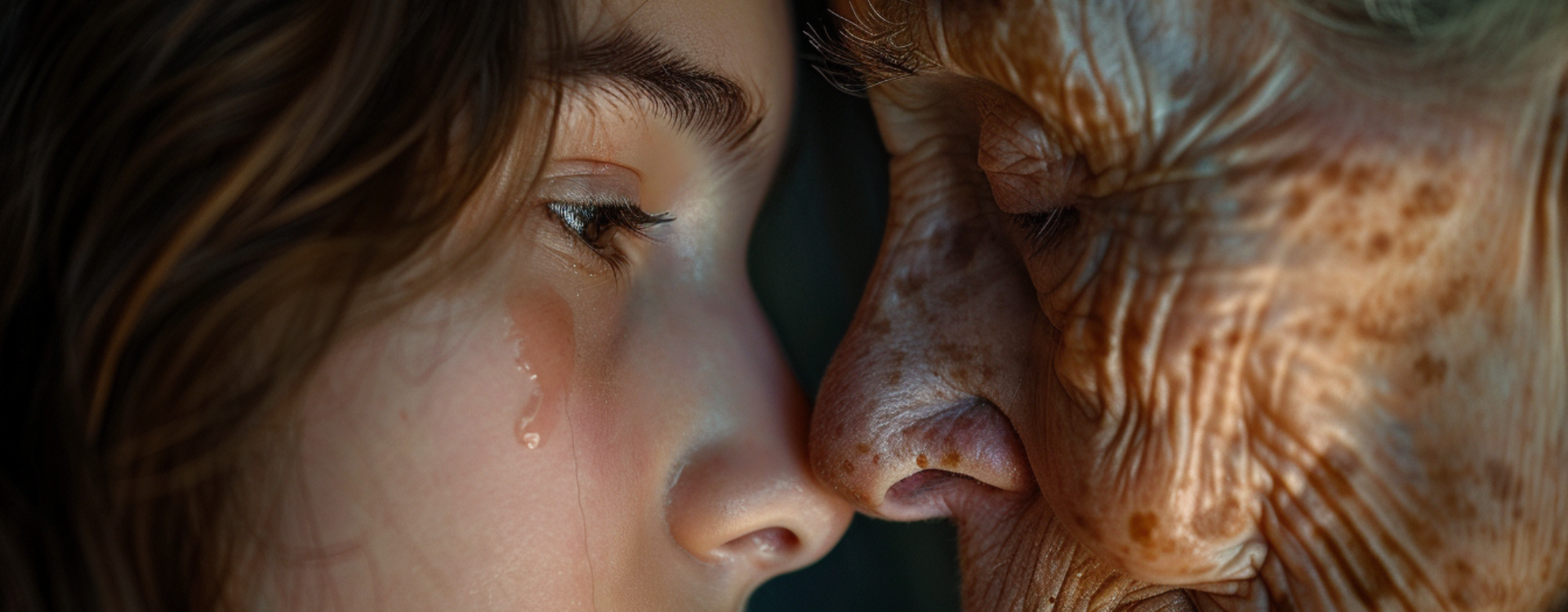
She was sitting up in bed, the early light coming in thin and grey through the narrow window. Age had cut deep lines into her face and none of them looked unkind; I’d always read them as a map of everything she’d laughed at and grieved over and given away. Her eyes hadn’t aged with the rest of her. They still had the spark in them, the quick read, the thing I’d leaned on for years without ever quite admitting how much. She watched me with the same mix of patience and amusement she’d been undoing me with since before I could walk.
The wrinkles and furrows held the whole history of us. Those were the hands that had sat by my bed through fevers, that had walked me through baking in her tiny kitchen with flour to the elbows and the smell of cloves and jam in everything, that had stood between me and the worst of the world more times than I could count. She had been the fixed point I steadied myself against, her strength forever passed off as nothing more than stubbornness.
My foolishness had done it — she was smiling now, properly, and it took the years straight off her. Being laughed at like this, with like this, made the whole mortifying business worth it. I put the picture of her away somewhere careful, in the part of me I kept for the things I couldn’t afford to lose.
It was the oldest knot in me, that bond — worn thin in places by everything we’d come through, and not once close to giving.
My grandfather had been gone five years. He’d made it well into his late eighties and gone how he’d wanted, quietly and with no fuss, and the quiet he left behind had its own particular shape — I still noticed it. He’d left more than stories and a battered chair. In my flat the wooden clock he’d built kept ticking, steady as anything, the sound he’d carved into it still doing its small stubborn work against the fact of him being gone. It told me the hour and, every hour, told me time was moving whether any of us were ready.
After he died she’d moved into a small retirement home in the middle of Hobart. The redbrick and the neat rose beds out front gave it a veneer of warmth, but no amount of landscaping covered what it actually was. Her room was the exception. It was crowded with her whole life — photographs in mismatched frames over every surface, small things set down with the particular care only memory bothers with. Arranged not to impress anyone but to remember. I came as often as I could and it was never enough, and the guilt of that worked away at me steadily, the quiet corrosive sort. I wanted to do more. Life had other ideas.
We were all that remained now.
My parents had been taken from Oscar and me in a single afternoon that split my life cleanly into before and after. They’d gone overseas to mark fifteen years together, and somewhere over the Swiss Alps the sightseeing helicopter they’d boarded came down — mechanical failure, the report said, complete and sudden, no one to blame and no one spared. I was nine. Far too young to hold the shape of it, only that it meant silence, and a cold that settled into me back then and never fully lifted. What I kept were the fragments: black clothes, the murmured condolences, the grown-ups who wouldn’t meet my eye, and the thick smell of lilies that turns my stomach to this day.
It was my mother’s parents, Jane and Patrick, who took us in. Their love was never loud but it never once wavered, and it filled the places words couldn’t reach. They were where I learnt that strength didn’t have to roar — that sometimes it just held on.
Oscar had drifted off. Running from the ghosts or chasing something better, I was never sure which. A love affair picked up on a backpacking trip had landed him in London and he’d simply stayed, and what we had of him now were twice-yearly phone calls and the odd postcard, bright skyline on the front, no return address on the back. He was kind about it. He was also gone, as though Tasmania had turned too haunted to set foot in again.
My father’s parents, Tom and Margie, had gone too — within a few months of each other, the second following the first as the long-married sometimes do, as if the arrangement simply stopped working once half of it was missing. Theirs had been the quiet, lasting sort of love. Another two names gone from a family photograph that was emptying out fast.
And so it was down to the two of us. Me and my grandmother. The last two lights left burning out of what had once been a whole sky of them, holding on to each other with hands that shook a little now but hadn’t yet learnt how to let go.
"I don’t know what you’re talking about, Jane," I said, grinning despite myself. Using her first name was an old joke between us, one of a hundred small rituals we’d built up over the years. It went back to my mulish teens, when Grandma had felt too small, too soft, too much a part of the girl I was busy trying to leave behind. By now it had turned into something else — affection wearing the costume of rebellion, a private language with only two speakers.
I hauled myself up out of the recliner, every muscle complaining about the night I’d spent folded into it, and the old leather gave its creak as it let me go. The smell of it came up with the movement — pipe tobacco and wood shavings, my grandfather worn right into the hide.
I bent to collect my boots from where I’d left them across the floor — kicked off the night before with a tiredness that had wanted to be rid of more than footwear. Sturdy leather, well-worn, battered from years of chasing leads down wet streets and picking across the uneven ground of crime scenes and the rougher corners of Hobart. Practical. Hard-wearing. Short on flair, long on purpose. Like me.
I laced the boots and stood, and the morning settled back onto me with everything it was carrying. The warmth of the last hour was already going. I crossed to her bed slowly, because every step was a step closer to leaving, and leaving her was the part that never got easier.
At the edge of the bed I leaned down and kissed her cheek. Her skin was warm and soft and very thin, and I held there a moment past what the gesture needed, the ache of it catching somewhere behind my throat. I wished, as I always did at this point, that there were more time in it for us.
"I’ve got to go home and get ready for work," I said, keeping my voice level, though the words sat awkwardly going out. Leaving her always felt unfinished — a thread pulled tight and never tied off.
"I’ll tell reception on my way out that you’re up and ready for the morning," I added, holding on to the small routine of it. The rituals were the scaffolding we both leaned on — a pretence that things would carry on exactly as they were, that what was coming wasn’t already on the road toward us.
"Thank you, dear," Jane said, and the warmth was all still there under the thinness of her voice. She reached for my hand and gave it the old squeeze, gentle and insistent at once — the same wordless reassurance she’d been handing me since I was a child.
Her hand was cool and light, the skin gone translucent and spotted with age. Her gold wedding band, snug once, turned loose on her finger now but had never once come off. I held her fingers and felt how little there was to them — bird bones, hollow and almost weightless — and underneath that, still, the hardness of a woman who had outlasted more than her share and wasn’t done yet. She was still here. Still her. Something rose in my chest that I had no name for and no room for, and I had to look away before it showed.
The moment I was out of the small, neat room I put the smile on — a warm one, for public use, already cracking at the edges under the pressure of everything I was holding down behind it. My hand went up fast to the corner of my eye, where a single tear had got out ahead of me. That tear, unwanted and far too honest, was the nearest I’d come to unravelling since I’d walked in. It stung going down, the pain more willing to admit what this was than the rest of me yet was.
The corridor ran on ahead of me, long and over-quiet, done out in the same institutional beige that always seemed built to flatten feeling rather than ease it. The air was heavy with disinfectant, sharp and sterile, never quite covering what sat under it — age, medication, the slow quiet business of dying. I’d carried that smell around in my head for years now. No amount of clean air ever scrubbed it out.
Jane had never once said the word to me. Not directly, not out loud. But I knew. Of course I knew. She’d had to give the doctors her consent, and somewhere in that she’d given me leave to carry it alongside her. Last week, behind a closed door and in those lowered voices they use, the specialist had said it plainly: cancer. Aggressive. Terminal. Weeks, he’d said, not months. I had heard all of those words before in the course of the job. I had never once heard them with her name in front of them, and it went through me clean and left nothing behind but a numb refusal to believe it.
What I couldn’t get past was the speed of it. The sheer brutal quickness. The thing had come out of nowhere, straight past years of good health and clean screenings, as though it had picked her on purpose. Her records were spotless — one good result after another, and then this. The doctors couldn’t account for it. I watched them frown down at their clipboards and shift their eyes away, uneasy, as if the fact that she wasn’t in any pain somehow made the diagnosis harder to stand behind. I knew an anomaly when I was looking at one. This was an anomaly with cruelty laid over the top.
She wasn’t suffering, at least not where anyone could see it, and I was grateful for that in a way that turned straight back into guilt. No pain in her face, no wasting away — just a stillness, an acceptance that put everyone who came into the room a little on edge. The calm of her was a mercy and almost more than I could stand, both at once. I held on to it anyway, while I waited for the other shoe to drop, because in my experience it always did. And I prayed, quietly and in pieces, that the end would stay as gentle as the start of it had been savage.
My steps slowed without my deciding it. My boots came down on the linoleum and the sound carried in the quiet, each one landing like a beat counted off a clock I didn’t want running. I could feel the whole thing up ahead of me, settled and certain, and every metre of corridor was a metre closer to it.
The dream hadn’t let go of me. It hung at the edge of things like an afterimage — Karl’s voice, his hands, the warmth of a thing that had never actually happened — and it clung like a phantom limb, present and missing at once. Here, in the disinfected hush of the corridor, that felt like a particular kind of cruelty.
Ahead of me the corridor just kept going, bleak and identical and apparently endless, and it only went one way, and the one way was loss. When Jane went, the last light from my childhood went with her. There’d be no one left who’d watched me be a child — no one who’d known me before the job, before the things the job does to you, before the hard edges set. Her dying would cut the last line back to a time when love had been a simple, unconditional thing. After that it would just be me, in a world that had turned colder and harder and far too wide to cross.
