Rokeby, Tasmania, Australia
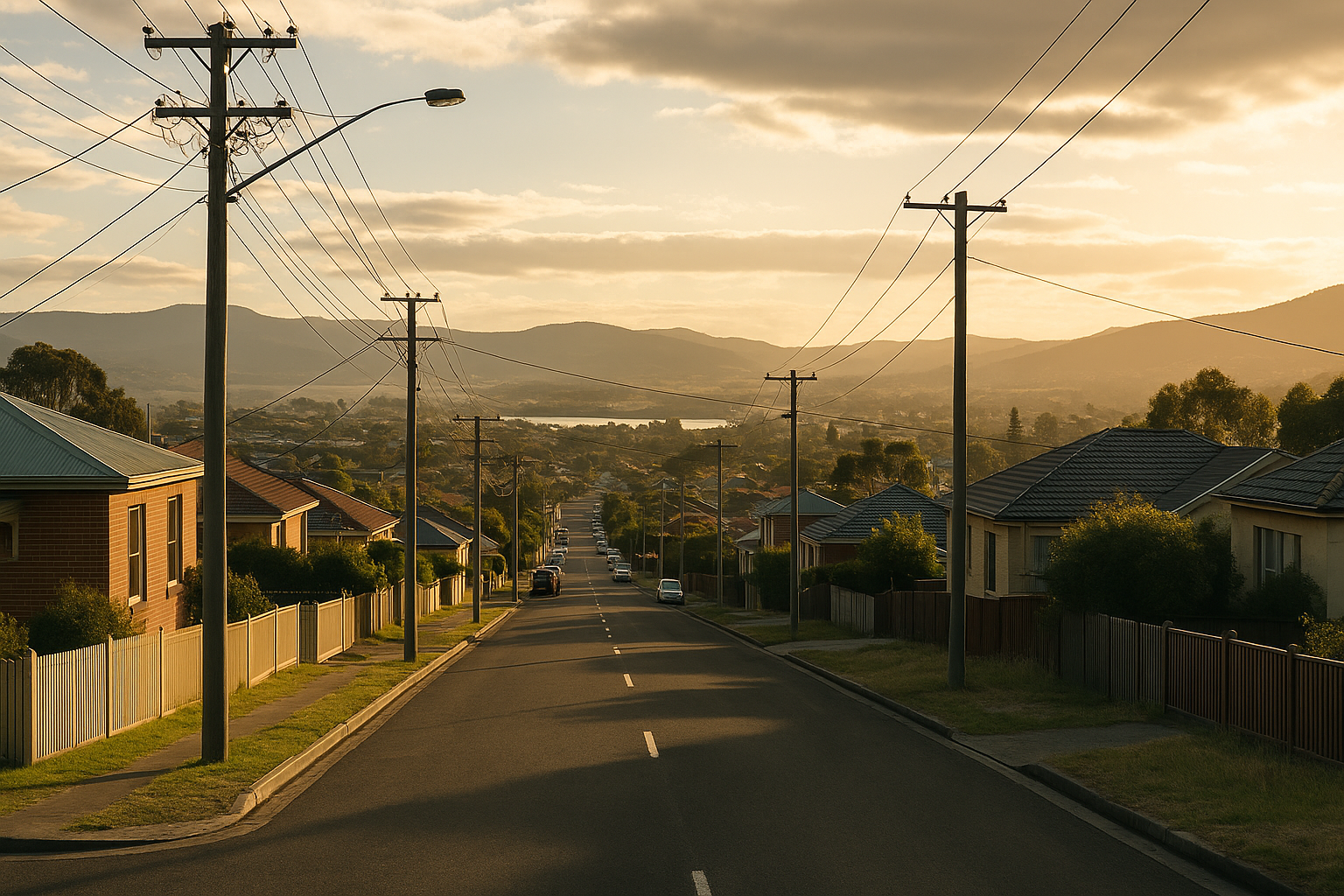
Rokeby was a suburb on Hobart's eastern shore, in the old farming district of Clarence Plains. It was Mumirimina country before it was a colonial village, and it was largely burned in the bushfires of 1967. In the 1970s the state built public housing estates there and opened Australia's first purpose-built police academy. The suburb that grew up around both carried a hard reputation and a complicated relationship with the police who trained on its edge. The Rokeby K9 Training Centre stood beside the Academy.
naniyilipata
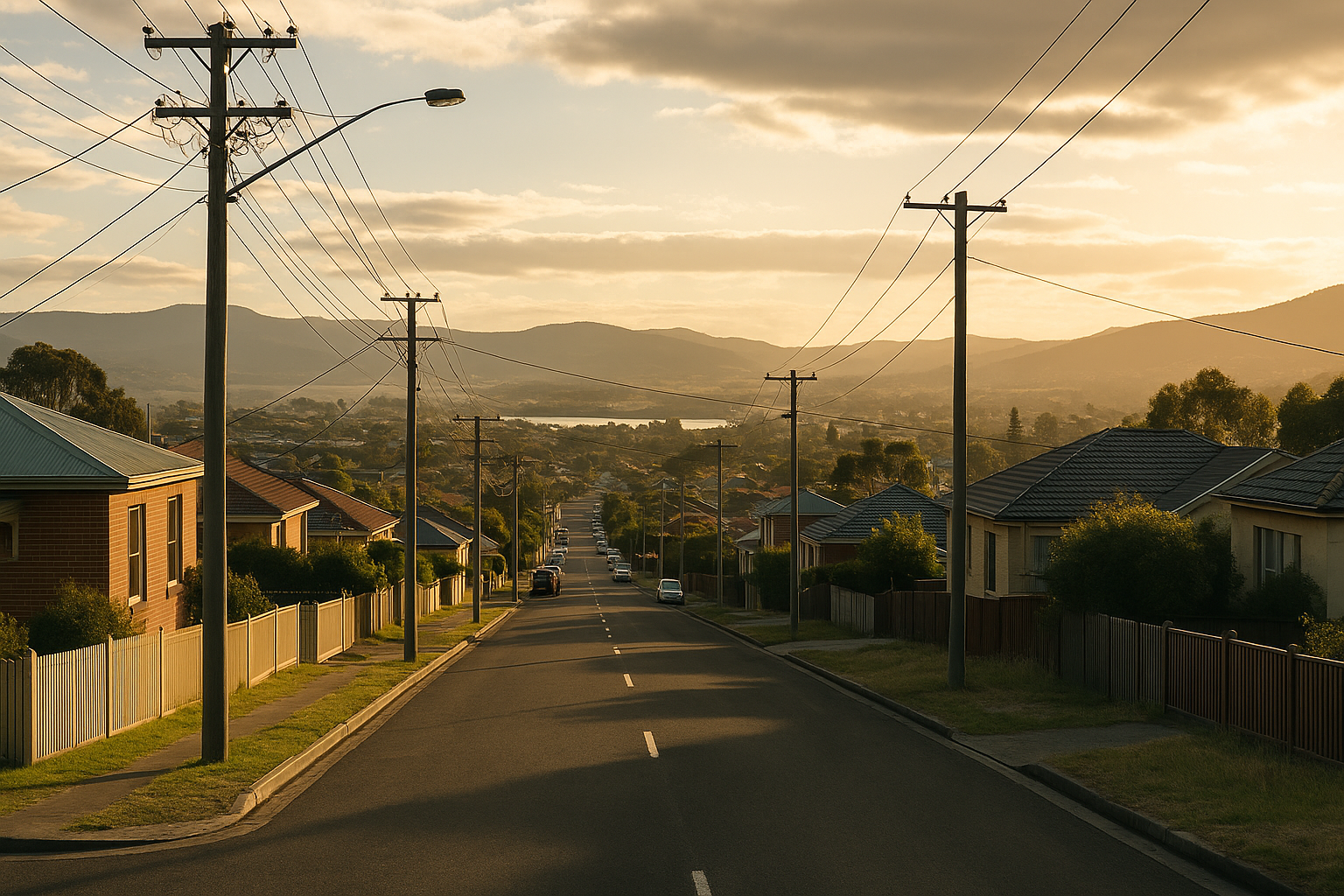
Rokeby lay on the eastern shore of the Derwent, on the flat country running south from the river towards Ralphs Bay, with the dry slopes of the Meehan Range and Mount Rumney behind it. The Clarence Plains Rivulet ran through it to the bay. Before the colony, the land belonged to the Mumirimina people of the Oyster Bay nation, who called it naniyilipata. They moved along the shore and across the plains with the seasons, burning the grasslands to keep them open and gathering shellfish from the bay.
They were dispossessed within a generation of the first British settlement on the river. By the 1830s the Mumirimina had been driven from the plains entirely. Their presence survived in the shell middens along the shoreline and, much later, in the name the district's interpretive trail took when it was rebuilt in the 2000s.
Clarence Plains
The first settlers arrived in 1808, families removed from Norfolk Island when that settlement was wound down and granted farms on the eastern shore in compensation. Most of them had been convicts or soldiers, and few had chosen to come. They cleared the plains for wheat and grazing, and the district they made was known for most of the century simply as Clarence Plains. It was among the earliest farmed land in the colony and, for a time, among its most productive.
The village grew up slowly around a farmhouse called Rokeby House, a watch-house, a school and an inn. The colony's first Anglican chaplain lived out his last years there and died in 1838. A church he had campaigned for was begun two years after his death. St Matthew's was built of local sandstone, its foundation stone laid in 1840 and the building dedicated in 1843. In 1857 it received the pipe organ that had been the first church organ brought to the colony, built in London in 1824 and moved across the river from St David's in Hobart when the cathedral replaced it. The organ was still in use in the twenty-first century.
The post office opened as Clarence Plains in 1850 and was renamed Rokeby in 1882. By then the district was a quiet farming community of a few hundred people, its road to Hobart a dirt track that was not sealed until the 1950s.
Black Tuesday
The bushfires of February 1967 came down off the hills behind the village and burned most of old Rokeby in an afternoon. Houses, sheds, orchards and a timber chapel were lost. St Matthew's survived, its sandstone walls blackened but intact, and the families who had lost everything sheltered in it that night.
The rebuilding was slow and incomplete. Harold Pennicott, the parish churchwarden and a dairy farmer who had lost his own milking shed, organised the relief fund and kept its accounts for six years. He was blunt about its limits. Several families took the insurance money and left for the western shore, and much of the old village was never rebuilt as it had been. Pennicott remained at St Matthew's until his death in 1991 and was buried in its cemetery.
The Estates
The Tasman Bridge opened in 1965 and turned the eastern shore from a ferry crossing into a commuter belt. In the 1970s the state Housing Department bought up the burnt-out farmland around Rokeby and built on it. The Rokeby Grange estate and the neighbouring Clarendon Vale estate were laid out on the Radburn plan, an American design that turned houses to face shared parkland and connected them by footpaths, laneways and underpasses, with the roads running behind.
The design was meant to build community. In practice the laneways were poorly lit, the underpasses became places people avoided after dark, and the houses' backs to the street left the roads unwatched. The estates filled with families who had few other options. Within twenty years Rokeby carried a reputation across Hobart that its residents resented and could not shake: unemployment, petty crime, and the assumption that anyone from Rokeby was trouble.
Doreen Maskell, who moved into Rokeby Grange with three children in 1978, spent the next three decades as the estate's tenants' advocate. She fought the department over damp, broken fences and lighting, sat on every residents' committee that formed and dissolved, and was regularly the first person a new tenant met. She opposed the demolition proposals of the 2000s, arguing that the estates' problems came from neglect rather than design, and that knocking houses down would only move the families somewhere else. Some of the laneways were closed and fenced. The houses stayed.
Ray Gorringe ran the general store and newsagency on the old village green from 1968, the year after the fires, until he retired in 1997. It was the one business in Rokeby that both the farming families and the estate families used, and Gorringe extended credit to both with the same reluctance.
The Academy
The Tasmania Police Academy opened at Rokeby in March 1976, the first purpose-built police academy in Australia. It replaced cramped training premises in Hobart and gave the force a campus of its own: classrooms, accommodation blocks, a gymnasium, a driving track, a firing range and a set of mock streetscapes where recruits practised arrests and domestic call-outs on each other.
Its opening came barely a year after the Tasman Bridge had been severed by a ship in January 1975, cutting the eastern shore off from the city. Recruits and instructors in the Academy's first two years reached Hobart by ferry or by the long road round through Bridgewater. The Academy's first officer in charge, Inspector Leonard Shipp, made a point of holding the opening parade on schedule regardless.
The relationship between the Academy and the suburb around it was never simple. Recruits trained in mock streets a few hundred metres from real ones where a patrol car drew a crowd and sometimes a thrown bottle. Residents of the estates complained about the noise from the range and the driving track, and about being stopped and questioned by officers who had learned their trade next door. Some of the Academy's instructors ran youth programmes and sports clinics on the estates; others never set foot in them. Both sides knew the other was there.
Generations of Tasmanian police passed through the Academy. Charlie Claiborne trained there with Squad 47 in 1993 and 1994 and graduated with the Commissioner's Award for Leadership. Most of the officers who later served at Hobart Police Station had started their careers on the same parade ground.
The K9 Centre
In the early 2000s Tasmania Police opened the Rokeby K9 Training Centre beside the Academy, to train the dogs bred at its facility in the Derwent Valley. It added barking at all hours to the range and the sirens, and the neighbours on the nearest streets added it to their list of complaints. Under Programme Director Claire Morgenstern, who took charge in December 2014, the centre developed the specialist training that produced Jargus-9B, certified there in October 2017 and paired with Detective Karl Jenkins in its assessment yard a week later.
Rokeby in 2018
By 2018 Rokeby was home to around four thousand people. The old village survived in fragments around St Matthew's, its cemetery and its picket-fenced cricket ground. The estates spread across the plain below. The Academy and the K9 centre occupied their own fenced ground on the suburb's edge, training each year's recruits and dogs within sight of the streets many of them would later be sent back to.