
Duncan Edward Flack
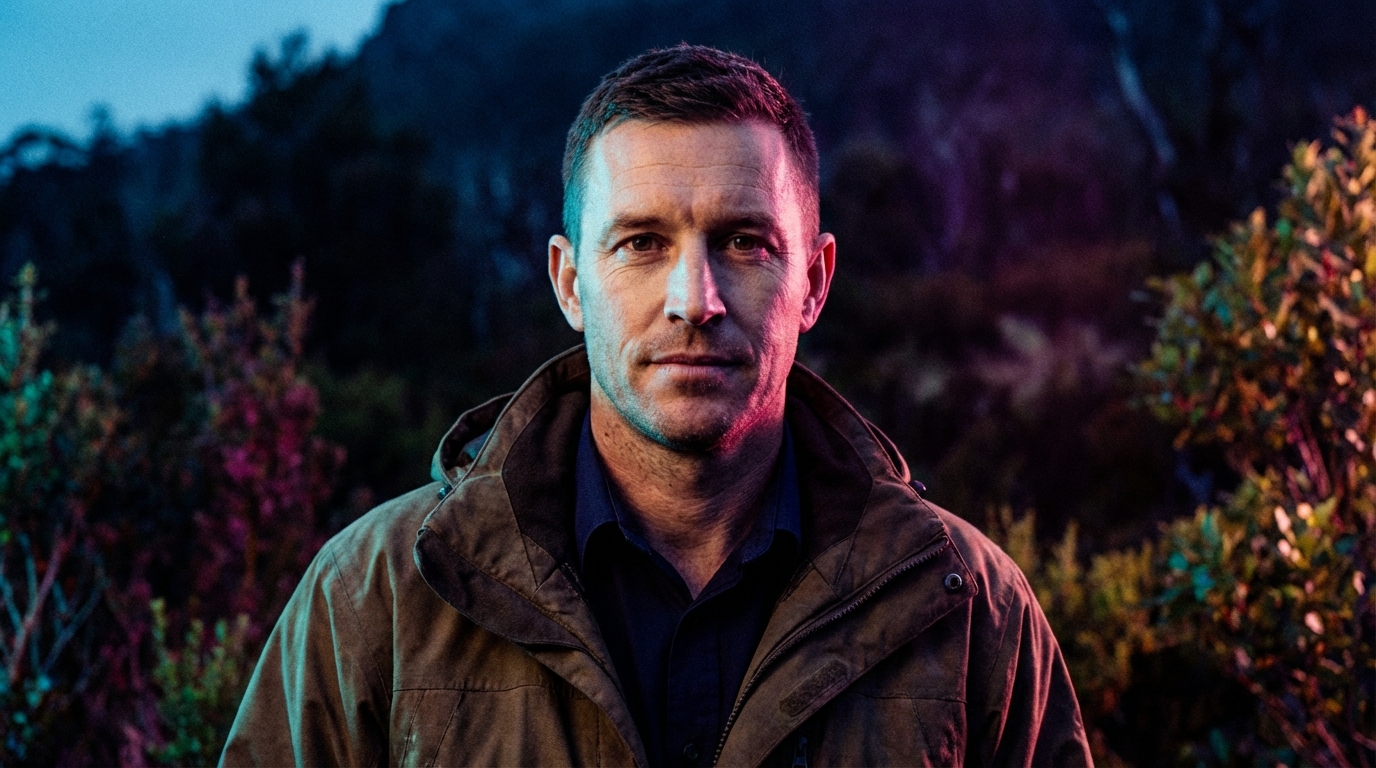
Duncan Edward Flack stands as the embodiment of community policing in Northern Tasmania, a senior constable whose twenty-two-year career has been defined by quiet dedication rather than spectacular heroics or rank advancement. Born and raised in Devonport's working-class neighbourhoods, Duncan brought to the Tasmania Police Academy in 2003 an understanding of the communities he would serve—the mechanics' early morning starts, the firefighters' midnight calls, the rhythms of a port city that never quite sleeps. His progression from probationary constable to senior constable reflects not meteoric ambition but steady competence, earning respect through consistency rather than charisma. Behind the uniform remains a man who finds solace in Tasmania's wilderness, whose photography captures the beauty he fights to protect, and whose relationship with family and partner provides the emotional anchor necessary to weather the erosion that police work inflicts upon the soul.
The Weight of Ordinary Service
Duncan Edward Flack entered the world on 12 March 1985 at Mersey Community Hospital, the first child of Thomas Edward Flack, an automotive mechanic, and Mary Judith Flack (née Saunders), a dental nurse. His birth came after years of careful planning by parents who believed in preparation, routine, and the virtue of steady work—values that would shape Duncan from his earliest consciousness.
The Flack household occupied a weatherboard home on Clements Street, five blocks from the port, with Thomas's garage—a corrugated iron shed that smelled perpetually of motor oil and metal filings—dominating the backyard. The proximity to Thomas's workplace meant Duncan grew up with the sounds of engines being rebuilt, the patient rhythm of diagnostic work, and the satisfaction of problems solved through methodical attention. His mother's dental practice schedule provided the household's structure—early starts, precise meal times, homework supervised with the same attention she brought to patient records.
Duncan's childhood unfolded against Devonport's industrial backdrop—the rail yards where freight cars coupled with metallic thunder, the factories processing everything from vegetables to cement, the port where Spirit of Tasmania ferries would later transform the city's economy. He learned early that Devonport residents worked with their hands, measured worth by reliability rather than wealth, and distrusted anyone who hadn't proven themselves through labour.
The family's equilibrium shifted with the birth of David Thomas Flack on 2 May 1988. Duncan, barely three, appointed himself his brother's protector with the seriousness that would later define his policing. He would stand guard by David's crib during naps, alert parents to every cry, and insist on helping with feeds despite his small hands barely managing the bottle. This fraternal devotion made David's sudden death from meningococcal infection on 8 January 1993 a defining trauma. Duncan, not yet eight, carried a guilt that logic couldn't dissolve—the belief that better vigilance might have noticed symptoms sooner, that protection had somehow failed.
Elizabeth Jane Flack's arrival on 4 October 1990 had expanded the family during what would prove their last complete years. Five years Duncan's junior, Elizabeth inherited their mother's precision and their father's mechanical aptitude, though she would direct these traits toward environmental science rather than traditional trades. The siblings' relationship, forged in shared grief after David's death, developed an intensity born from understanding that permanence was illusion, that family required active preservation.
The Inheritance of Duty
School presented challenges that had nothing to do with intelligence. Duncan possessed a sharp mind that grasped practical applications instantly but struggled with abstract concepts that seemed divorced from reality. Mathematics made sense when calculating compression ratios in his father's garage but became incomprehensible when reduced to algebraic equations. His teachers at Devonport Primary noted this pattern—exceptional performance in hands-on projects, mediocre results in theoretical examinations.
Thomas's influence pervaded Duncan's development. Father and son spent weekends in the garage, not talking much—Thomas was a man of few words, preferring demonstration to explanation—but sharing the satisfaction of engines restored to working order. Thomas's volunteer work with the Devonport Fire Brigade introduced another dimension of service. Duncan would wake to the sound of his father leaving for pre-dawn callouts, returning hours later with soot under his fingernails, ready to open the garage as if fighting fires was merely part of morning routine.
Mary's contribution was subtler but equally profound. Her work as a dental nurse required managing anxious patients, maintaining sterile environments, and executing procedures with precision despite human variables. She brought this same approach to parenting—calm in crisis, methodical in routine, emotionally steady even when the family grieved. Her response to David's death—channelling grief into establishing a memorial fund for meningococcal research—taught Duncan that tragedy could generate purpose rather than paralysis.
The transition to Devonport High School in 1998 coincided with the family finding their new rhythm as four rather than five. Duncan threw himself into physical activities—Australian Rules football, swimming, cross-country running—anything that exhausted him enough to sleep without thinking. His natural athleticism earned him selection for regional competitions, though he lacked the competitive edge coaches wanted. Duncan played to belong, not to dominate.
His true passion emerged unexpectedly during Year 10 camp at Cradle Mountain. Borrowing a teacher's camera to document the expedition, Duncan discovered photography's capacity to freeze moments that usually slipped past unnoticed—morning mist rising off Dove Lake, a wallaby frozen mid-bound, his classmates' unguarded expressions around the campfire. The developed photographs revealed an artistic eye that surprised everyone, including Duncan himself. Thomas, typically reserved with praise, studied the images carefully before pronouncing them "proper work"—high acknowledgement in the Flack household.
The Decision to Serve
The path to policing wasn't predetermined but emerged from accumulated influences. Duncan initially considered following Thomas into mechanical work, even obtaining his apprenticeship qualifications whilst still at school. But watching his father's body accumulate the toll of physical labour—the stooped gait from years bent over engines, hands increasingly arthritic, the persistent cough from decades of exhaust fumes—clarified that different service might honour the same values.
The catalyst came during his final year at Devonport High. A stabbing at the local shopping centre—a domestic dispute turned public violence—left a young mother dead whilst bystanders filmed rather than intervened. Duncan had been present, frozen like everyone else, watching blood pool on linoleum whilst sirens wailed closer. The responding officers' professionalism amidst chaos, their ability to impose order on madness, revealed a purpose that resonated with Duncan's need to be useful rather than merely successful.
His application to Tasmania Police faced initial rejection—his academic transcripts showed competence without excellence, his references praised character but couldn't quantify leadership potential. But Devonport's Senior Sergeant Patricia Holmes, who'd known the Flack family for twenty years, advocated for reconsideration. She argued that policing needed officers who understood their communities from within, not above. She reminded the panel that Thomas Flack had served the community for thirty years as a volunteer firefighter, that the family embodied the quiet service Tasmania Police claimed to value. The review panel agreed, conditionally accepting Duncan pending successful academy completion.
Forging Identity at Rokeby
Duncan arrived at the Tasmania Police Academy on 3 February 2003 as part of the smallest intake in seven years—nineteen recruits facing a transformed institution. The morning coincided with Hobart's first terrorism-response drill, sirens wailing across the city as emergency services responded to a simulated chemical attack. Commandant Patricia Wheeler used the coincidence to illustrate the changed world these recruits would police, where local crime increasingly intersected with global security concerns.
His room-mate, Bradley Matthews, was a former mechanic from Launceston whose brother's unsolved murder drove him toward law enforcement. Their partnership balanced Duncan's intuitive understanding of people with Bradley's systematic approach to problems. Together, they navigated the academy's evolving curriculum—digital databases that replaced filing cabinets, cultural competency sessions that confronted unconscious biases, scenario training that prioritised negotiation over confrontation.
Duncan excelled in practical applications but struggled with academic components. Criminal law required memorisation that didn't come naturally, report writing demanded precision that felt performative. He passed examinations through brute force studying, transcribing notes repeatedly until muscle memory substituted for comprehension. Bradley coached him through legislative frameworks whilst Duncan helped Bradley overcome aquatic limitations exposed during swimming requirements—Duncan's years of beach swimming at Mersey Bluff proving invaluable.
The defensive tactics training revealed Duncan's natural advantage—not aggression but anticipation. Years of reading mechanical problems in his father's garage translated into reading human behaviour patterns. He could sense escalation before it manifested, position himself advantageously without appearing threatening. Instructor James Reilly noted this gift, recommending Duncan for additional conflict resolution training that would define his policing style.
The academy's financial constraints—heating that barely functioned, shared textbooks, reduced ammunition allocations—reminded Duncan of the Flack household's frugality. Thomas had taught that limitations forced innovation, that making do developed character. Duncan adapted without complaint, wearing extra layers to bed, studying by torchlight when power restrictions limited evening electricity. These hardships built cohesion amongst Class of 2003—shared suffering creating bonds that would endure throughout their careers.
Graduation on 28 November 2003 saw seventeen of the original nineteen recruits receive their badges. Duncan graduated with honours, not for academic excellence but for embodying the community policing philosophy Wheeler championed. His evaluation noted exceptional interpersonal skills, natural conflict resolution abilities, and the patience essential for effective law enforcement. Thomas attended the ceremony in his best clothes—the suit reserved for weddings and funerals—his presence saying more than words about pride in his son's achievement.
Early Years in Uniform
Duncan's first posting as Probationary Constable at Launceston Police Station began on 5 January 2004. The state's second-largest city provided exposure to crime varieties Devonport rarely saw—organised drug distribution, white-collar fraud, interstate fugitive operations. Senior Constable Margaret Yu mentored Duncan through the transition from academy theory to street reality, teaching him that policing was ten percent law enforcement, ninety percent social work.
Launceston's socioeconomic diversity challenged Duncan's Devonport-formed assumptions. Responding to domestic violence in Ravenswood's public housing revealed poverty's grinding desperation. Attending break-ins in Trevallyn's affluent homes exposed wealth's paranoid isolation. He learned that crime crossed all boundaries, that victims and perpetrators often shared more similarities than differences.
Night shifts along the North Esk River introduced Duncan to Launceston's homeless population. Rather than moving them along, he learned their names, their stories, their triggers. This approach drew criticism from colleagues who preferred enforcement over engagement, but Duncan's sectors reported fewer disturbances. Word spread amongst the street community that Constable Flack would listen before acting, would offer resources rather than just restrictions.
The 2005 Launceston floods tested every skill the academy had taught. Duncan worked seventy-two consecutive hours, evacuating residents, preventing looting, coordinating emergency services. His photographs of the flood's aftermath—not for evidence but for documentation—captured both destruction and community resilience. These images would later feature in Tasmania Police's training materials on emergency response.
His probationary period concluded with commendations for community engagement and crisis management. However, performance reviews also noted areas requiring development—report writing remained laborious, court testimony lacked commanding presence, and his reluctance to use force occasionally endangered himself and partners. Senior Sergeant David Mills recommended transfer to a smaller station where Duncan's community policing strengths could flourish without Launceston's intensity.
Finding Rhythm in Burnie
The transfer to Burnie Police Station in March 2008 brought Duncan closer to home—only an hour from Devonport, allowing regular family contact that Launceston's distance had prevented. Burnie, industrial and unpretentious like Devonport, suited his temperament. The station, under Inspector Robert Thompson's leadership, emphasised preventive policing—youth engagement programmes, domestic violence intervention, drug rehabilitation support over punitive measures.
As Constable at Burnie, Duncan developed specialisations that matched his strengths. He became the station's youth liaison officer, conducting school visits that replaced fear with familiarity. His photography skills proved valuable for evidence documentation, creating visual records that prosecutors praised for their clarity and composition. He established Burnie's first Police Citizens Youth Club photography programme, teaching at-risk teenagers to see their community through different lenses—literally and metaphorically.
The period from 2008 to 2013 solidified Duncan's policing philosophy. He measured success not by arrests but by crimes prevented, relationships built, cycles broken. His beat included Burnie's port district, where his understanding of working-class culture—inherited from his father—enabled connections other officers couldn't establish. Mechanics, labourers, and tradespeople who'd never trust a badge would talk to Thomas Flack's son.
Personal challenges paralleled professional development. His romantic relationship with Sarah Mitchell, a nurse at North West Regional Hospital, provided stability but also stress. She worked rotating shifts that rarely aligned with his, understood too well the violence humans inflicted upon each other, and carried her own trauma from emergency department horrors. They supported each other through understanding rather than conversation, sharing silence more often than words. The relationship ended in 2012, Sarah citing emotional unavailability that Duncan couldn't dispute.
Duncan's photography evolved during this period from documentation to art. He exhibited at Burnie Regional Art Gallery in 2011—"Unseen Tasmania," a collection capturing the state's overlooked corners. The exhibition's success surprised him, selling enough prints to fund upgraded camera equipment. But photography remained escape rather than ambition, a way to remember beauty existed despite daily exposure to humanity's failures.
Promotion to Senior Constable in 2012 recognised Duncan's contribution to Burnie's crime statistics—youth offences down thirty percent in his sectors, domestic violence reporting up fifty percent due to victim trust. Inspector Thompson's recommendation emphasised Duncan's embodiment of modern policing principles, his ability to build community partnerships that traditional enforcement couldn't achieve.
Returning Home: Devonport Command
Duncan's 2013 transfer to Devonport Police Station felt like destiny fulfilling itself. He returned not as Thomas Flack's son but as Senior Constable Flack, bringing nine years of experience to the community that shaped him. The station had modernised since his youth—digital systems, professional standards unit, community policing emphasis—but the fundamental challenges remained.
Devonport had changed too. The Spirit of Tasmania ferries brought tourism but also drug trafficking routes. Demographic shifts introduced cultural diversity that challenged old assumptions. Economic uncertainty as industries closed left generational unemployment in suburbs once defined by working-class pride. Duncan navigated these changes through relationships—knowing which families struggled, which youths risked gang recruitment, which elderly residents needed welfare checks disguised as routine patrols.
His additional responsibilities included supervising junior officers, conducting complex investigations, and coordinating community safety programmes. Duncan excelled at mentorship, remembering his own academy struggles and providing support that balanced standards with understanding. Constables under his supervision consistently rated him as approachable but professional, demanding but fair.
The 2015 return to Tasmania Police Academy for the Community Policing Workshop reconnected Duncan with evolving law enforcement philosophies. The week-long intensive programme, led by international experts, reinforced his intuitive approach whilst providing theoretical frameworks to articulate what he'd always practised. His workshop presentation on building trust in marginalised communities became required viewing for subsequent academy intakes.
Family dynamics grew complex as parents aged. Thomas, now in his sixties, continued working in the garage though his pace had slowed. The volunteer firefighting that defined his service ended after a back injury during a warehouse fire—forced retirement that left him restless, critical of changes to the brigade he'd helped build. Mary maintained her precise routines but Duncan noticed subtle changes—repeated stories, misplaced items, the occasional confusion that suggested cognitive decline beginning its insidious advance.
Elizabeth's environmental science career flourished, taking her across Tasmania conducting conservation assessments. Her relationship with Duncan remained close despite their different paths—she the advocate for wilderness preservation, he the guardian of human community. Their shared understanding of service, inherited from parents who demonstrated rather than preached civic duty, created a bond that survived their different expressions of the same values.
The Choice to Remain Senior Constable
Remaining a Senior Constable after 2012 represented a conscious choice rather than career stagnation. Duncan had opportunities for promotion—his performance reviews consistently noted his suitability for supervisory roles, his community policing expertise, his mentorship capabilities. But advancement meant moving away from the hands-on work that gave his service meaning. Sergeants managed rosters, attended endless meetings, became administrators of policing rather than practitioners of it.
Duncan chose differently. He understood, watching colleagues accept promotions they didn't want for salaries they needed, that rank measured one kind of success whilst impact measured another. Thomas had never sought to own a garage empire, content to be an exceptional mechanic rather than a mediocre businessman. Duncan inherited this wisdom—better to excel at work you valued than struggle in positions that elevated status whilst diminishing satisfaction.
His decision disappointed some. Inspector Robert Thompson at Burnie had groomed Duncan for advancement, viewing him as future leadership material. The refusal of promotional opportunities puzzled colleagues who assumed everyone sought upward mobility. But Duncan's choice reflected hard-won understanding that authority earned through presence lasted longer than authority granted through rank.
The role of Senior Constable suited Duncan's strengths perfectly. He maintained operational focus—still responding to calls, still building community relationships, still mentoring junior officers without formal supervisory burden. His unofficial influence often exceeded that of ranked officers because respect was freely given rather than organizationally mandated. Constables sought his advice, sergeants valued his perspective, and inspectors trusted his judgement on community matters.
The 2019 Mental Health Awareness Training at the academy proved particularly relevant. Duncan had observed—in himself and colleagues—the cumulative toll of witnessing society's worst moments. Sleep disrupted by recurring images, relationships strained by emotional unavailability, cynicism creeping into worldviews once optimistic. The training provided vocabulary for experiences previously unnamed, strategies for maintaining psychological health amidst psychological hazards.
Duncan's relationship with partner Rebecca Coleman (beginning in 2017 after years of solitude following Sarah Mitchell's departure) introduced stability his life had lacked. Rebecca, a social worker specialising in family violence, understood without explanation why Duncan sometimes needed hours of solitude after shifts. Their shared professional exposure to human crisis created understanding that civilian partners might not possess. They purchased a cottage in Spreyton, fifteen minutes from Devonport, where gardens and renovation projects provided therapeutic distraction.
Photography remained Duncan's primary emotional outlet. His equipment grew sophisticated—full-frame cameras, professional lenses, editing software—funded by occasional commercial work. But his subjects remained Tasmania's overlooked spaces: abandoned farmhouses reclaimed by nature, predawn Port of Devonport when container ships arrived, the faces of Devonport's elderly watching their city transform beyond recognition. These images documented a Tasmania disappearing beneath progress, preserving what would soon exist only in memory.
The Pandemic Crucible
The COVID-19 pandemic introduced unprecedented challenges. Enforcing public health orders strained community relationships Duncan had spent decades building. Businesses he'd protected faced bankruptcy from lockdowns he had to enforce. Domestic violence surged as isolation trapped victims with abusers. Mental health crises overwhelmed resources. Duncan worked eighteen-hour shifts, slept in his office, watched Devonport's social fabric tear along previously invisible seams.
Thomas, deemed vulnerable due to age and respiratory issues from years of exhaust fume exposure, isolated completely. The garage closed for the first time in forty years. Without work to define his days, Thomas deteriorated—not physically but purposefully. Duncan delivered groceries, attempted conversation through windows, watched his father shrink into himself. Mary, confused by restrictions she couldn't fully comprehend, required constant supervision as her cognitive decline accelerated under isolation's pressure.
The pandemic exposed fault lines Duncan had ignored. His relationship with Rebecca, strong during normal times, strained under constant proximity. Both working from home—him coordinating remote policing operations, her conducting virtual counselling sessions—revealed how much their relationship had depended on separation. They survived through deliberate scheduling, creating artificial boundaries within shared space, but the ease they'd previously enjoyed never fully returned.
Elizabeth's work classifying critical habitats continued despite restrictions, her solitary fieldwork suddenly valuable when human contact became dangerous. She moved temporarily to Devonport, helping manage their parents whilst Duncan maintained essential services. The siblings' partnership, forged in childhood grief, proved resilient under adult pressure. They developed systems—alternating parent care, sharing household duties, protecting each other's scarce solitude—that maintained family stability when everything else fragmented.
Contemporary Challenges
Senior Constable Duncan Edward Flack continues serving at Devonport Police Station, his fortieth birthday marking twenty-two years since academy graduation. His body bears the accumulated toll—chronic back pain from years of equipment belts, hypertension that medication barely controls, and a knee that predicts weather changes with arthritic accuracy. But retirement remains distant, partly financial necessity, partly inability to imagine identity without the uniform.
His current duties include coordination of Devonport's youth intervention programmes, liaison work with social services for family violence responses, and mentorship of junior officers struggling with career demands. Duncan's experience makes him valuable for complex investigations requiring community trust—the missing teenagers who aren't really missing, the elderly abuse hidden behind suburban doors, the drug networks operating through legitimate businesses everyone frequents. He operates with an autonomy that newer senior constables rarely achieve, his two decades of service earning him latitude to pursue cases as his judgement dictates.
Recent challenges include ice (methamphetamine) infiltrating rural communities previously untouched by hard drugs. Duncan watches families he's known for decades destroyed by addiction, children he'd taught football now committing crimes to fund habits. The futility of arresting users without addressing causes weighs heavily, enforcement feeling like bailing water from a boat with no bottom.
Thomas, now seventy-one, maintains the garage more as museum than business. He opens occasionally, fixing long-term customers' vehicles with hands that shake slightly, refusing to acknowledge limitations. Mary's dementia, officially diagnosed in 2023, progresses with cruel efficiency. She recognises Duncan intermittently, calling him David sometimes, asking when Thomas will return from fires he stopped fighting decades ago. The decision to transition her to full-time care, fought by Thomas with stubborn denial, required Duncan and Elizabeth's united intervention.
Elizabeth's role as environmental advocate increasingly intersects with Duncan's police work—illegal logging operations, wildlife trafficking, environmental protesters requiring careful handling. The siblings navigate these overlaps professionally, their different perspectives enriching rather than conflicting. Elizabeth's data on environmental crime patterns helps Duncan's investigations, while his understanding of community dynamics informs her conservation strategies.
Rebecca and Duncan's relationship endures through deliberate effort. They schedule time together like shifts, protecting Tuesday dinners and Sunday mornings from professional intrusion. Their decision not to have children—finally voiced after years of silent agreement—reflects awareness that their emotional reserves are already overdrawn. Instead, they invest in their property, creating gardens that bloom despite neglect, renovating rooms that become sanctuaries from external chaos.
The Photographer's Eye
Duncan's photography has evolved into more than hobby but less than profession. His images appear in Tasmania Police annual reports, local tourism campaigns, and occasionally national exhibitions. But commercial success isn't the goal. Photography provides what policing cannot—control over narrative, ability to frame beauty within ugliness, power to preserve moments before they vanish.
His current project documents Tasmania Police officers in unguarded moments—the exhaustion after double shifts, the black humour that deflects trauma, the quiet pride in service despite public criticism. These portraits, exhibited at the Police Academy, remind recruits that badges are worn by humans who struggle, doubt, and persist despite reasonable alternatives.
The technical aspects of photography appeal to Duncan's practical intelligence. Understanding light's behaviour, lens physics, and composition rules provides problems with definitive solutions—unlike policing's moral ambiguities. His camera bag accompanies him always, ready to capture evidence or art depending on circumstances. This dual purpose reflects Duncan's own existence, straddling professional obligation and personal expression.
Local galleries regularly request exhibitions, but Duncan remains selective. He chooses venues that donate proceeds to youth programmes, family violence services, or officer welfare funds. The photographs sell modestly, enough to fund equipment upgrades and occasional workshops with professional photographers who teach techniques Duncan adapts to his vision.
