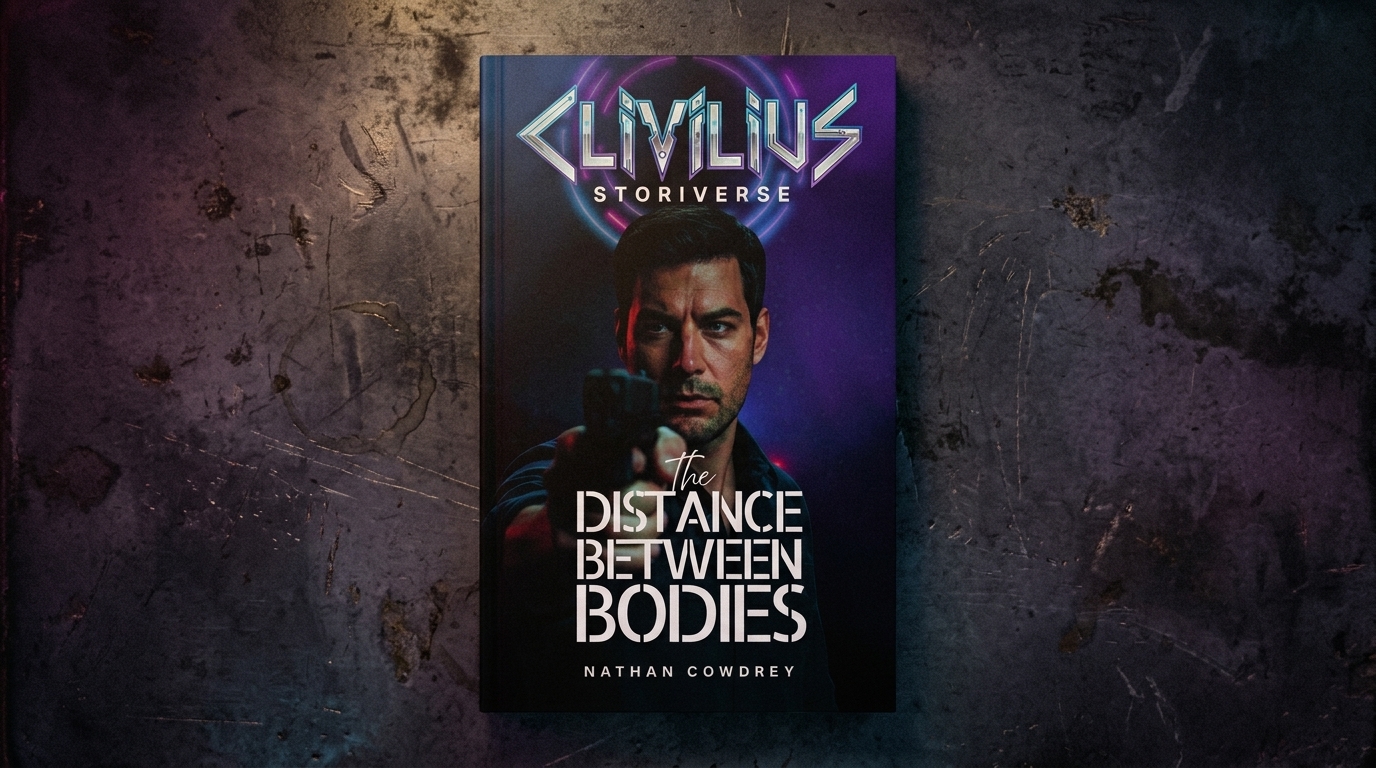
David Geoffrey Marston
David Geoffrey Marston was born in Burnie on 5 May 1973, the only son of fisherman Geoffrey Walter Marston and teacher Evelyn Joyce Marston, with two younger sisters, Margaret and Catherine. He joined Tasmania Police in 1992, rose through the Criminal Investigation Branch, and from 2014 commanded the Communications and Control Division in Hobart as superintendent. Methodical, exacting and hard to work for, he married librarian Alice Catherine Hughes in 1999 and raised two children, Grace and Samuel, in Lenah Valley.

Marine Terrace
David Geoffrey Marston was born at 6:12 am on 5 May 1973 at the Burnie Hospital, on the north-west coast of Tasmania, the first child of Geoffrey Walter Marston and Evelyn Joyce Marston née Carrington. His father, born in Burnie in 1945, was a commercial fisherman who had bought his own thirty-five-foot trawler, the Steady Return, two years earlier. His mother, born in Launceston in 1947, taught at Burnie Primary School. They had married at St George's Anglican Church in Burnie in December 1971 and lived in a weatherboard house on Marine Terrace, three streets back from the water.
Two sisters followed. Margaret Anne Marston was born on 19 August 1975 and Catherine Louise Marston on 2 February 1978. David was the only son, and from the beginning his father treated that as a fact with consequences.
Burnie in the 1970s was a working town built around the Associated Pulp and Paper Mills, the port and the boats. The air smelled of sulphur from the mill when the wind came from the west, and of diesel and fish on the wharves. Most of the fathers on Marine Terrace worked shifts. Geoffrey worked tides and weather, which meant he was gone for days or weeks at a stretch and then home all at once, filling the house.
The household ran on two rhythms. When the Steady Return was out, Evelyn kept a loose, talkative home full of library books, where the children ate at the kitchen bench and read at the table. When Geoffrey came back, the house went quiet. Meals were at fixed times, shoes were lined up at the door, and report cards were produced and examined. Geoffrey was not a violent man, but his disappointment had weight, and David learned early to read the weather in his father's face before he came through the gate.
The Fisherman's Son
David was a careful child. He organised the neighbourhood football games on the vacant block at the end of Marine Terrace, drew up the teams, and kept the score in a notebook. He disliked games that changed their rules halfway through. At Burnie Primary School, where his mother taught the younger grades, he was quick at arithmetic and read beyond his age, and he spent many afternoons after the bell in her classroom, stacking chairs and helping slower readers through their books while she marked.
His father took him out on the Steady Return for the first time in the summer of 1982, when David was nine. He was seasick within the hour and spent the day bent over the stern while Geoffrey worked the nets around him without comment. He went out again the following summer and was sick again. After the third season Geoffrey stopped asking. Neither of them mentioned it afterwards, and David understood the silence as a verdict.
Margaret, two years younger, kept out of her father's way and drew. Catherine, the youngest, brought home injured birds and a succession of stray cats that Geoffrey tolerated for his wife's sake. Both girls grew up aware that their father's expectations were aimed mainly at their brother. Margaret resented it. Catherine was more interested in the cats.
David's relationship with his sisters reflected the household. He was protective of Catherine in the playground and later on the school bus, and she followed him around until she was old enough to find him dull. With Margaret he was competitive and often unkind, correcting her homework uninvited and reporting her lapses to their father when he was home. She did not forget it.
Numbers and Kings
He went to Burnie High School from 1985 and then to Hellyer College for his final two years, from 1989 to 1990. He did well in mathematics and modern history, less well in English, where his teachers found his essays correct and lifeless. A history teacher at Hellyer, Neil Ashby, lent him biographies from his own shelves: Churchill, Monash, Shackleton. David read them all and returned each with a written summary that Ashby had not asked for.
Ashby also ran the college chess club. David joined in his first term and was beating Ashby by the end of the year. He played a cautious, defensive game built on patience and the slow exhaustion of his opponent's options, and he rarely lost to anyone who was impatient. It was the most reliable pleasure of his adolescence and remained so for the rest of his life.
By his final year he was considering teaching. His mother encouraged it without pressing. When he raised it with his father over dinner in the winter of 1990, Geoffrey put down his knife and said that teaching was women's work, in front of a table that included his wife and two daughters. Evelyn said nothing. David did not raise it again, and he never entirely forgave either of them for that evening: his father for saying it, and his mother for letting it stand.
He finished college at the end of 1990 with good results and no plan. He spent 1991 working at the Burnie wharves as a tally clerk, counting containers onto ships, a job his uncle James arranged. He was too young to apply to the police until he turned eighteen, and when he did, in May 1991, he applied the same week.
Squad 45
David reported to the Tasmania Police Academy at Rokeby on 3 February 1992 as one of twenty-four recruits in Squad 45, the first intake of the year. The officer in charge was Superintendent Ronald Hext, a former military policeman who opened the squad's training by walking its lines in silence. Two recruits were lost to the medical examinations that morning. In the afternoon a substation fault blacked out the gymnasium halfway through the fitness tests, and the instructors finished them by torchlight and stopwatch. David ran the 2.4 kilometres third fastest in the squad.
His roommate was Timothy Crawford, a former primary school teacher from Hobart six years older than him who had left the classroom looking for something else. They were poorly matched. Crawford was untidy and easy-going and talked late into the night. David kept his side of the room in inspection order and read procedure manuals in bed. They argued for the first three months and were, by the end of the course, friends of a guarded kind who stayed in contact for decades.
The Academy suited David better than anywhere he had been. It had rules, a timetable and a clear measure of success. He excelled in law, procedure and the planning exercises, and in the scenario training he was calm and methodical. His instructors' reports noted the same weakness in different words. He applied procedure correctly and without judgement. In one domestic disturbance scenario he followed the protocol so exactly that he failed to notice the role-player playing the victim had stopped breathing. Instructor James Reilly took him aside afterwards and told him that the manual was a floor, not a ceiling.
He graduated in November 1993, third in his squad. His parents drove down from Burnie for the parade. Geoffrey shook his hand and told him to keep his head down, which was the most his son had expected and slightly more than he had hoped for.
The Detective
His first posting was to general duties in Launceston, where he spent three years on patrol in the northern suburbs. He was competent and unpopular. He wrote thorough reports, made few mistakes and corrected the mistakes of his partners in front of them. A senior constable he worked with for a year, Barry Gillam, told him that he would make a good detective because detectives did not need anyone to like them.
He transferred to the Criminal Investigation Branch in Hobart in 1996 as a detective constable. Investigation suited him better than patrol. It rewarded patience, documentation and the ability to hold a large number of facts in order. In 1998 he spent eight months on a joint investigation into a heroin and amphetamine supply network operating between Hobart and Devonport, much of it spent building a picture of the network from telephone records and surveillance logs. The arrests came in a single morning in October 1998. He was commended, and it was the first time his father telephoned him about his work without being prompted.
Earlier that year, on 15 April 1998, he had represented the CIB at a community consultation on youth crime held at the Hobart City Library. The library sent its newest assistant children's librarian, Alice Catherine Hughes, then twenty-two. They spent most of the meeting disagreeing politely about the relationship between literacy and juvenile offending, and afterwards he asked her for coffee to continue the argument. Alice later said that he was the first man who had asked her out by citing a statistic.
They courted for eighteen months. He planned every outing in detail. She found this funny rather than tiresome, which no one before her had. They played chess in the evenings, which she lost, and walked the tracks on kunanyi on weekends. They married on 27 November 1999 at St David's Cathedral in Hobart and bought a house in Lenah Valley the following year.
Bridgewater
David was promoted to detective sergeant in 2002, the same year his daughter Grace Evelyn Marston was born, on 14 March. A son, Samuel Geoffrey Marston, followed on 22 November 2005. David was an attentive father in the hours he was home and absent for many of the hours he was not. Alice kept the household running around his rosters and translated him to the children when they were small. He insisted on homework at the kitchen table and checked it every night. Grace, who resembled him, worked to meet his standard and sometimes cried when she could not. Samuel, who did not, learned to work around him.
On the evening of 9 June 2007, a man named Darren Pettit barricaded himself inside a house in Bridgewater with his estranged wife and their two children, aged six and nine, and a shotgun. David was the senior detective on scene for the first hour, before the negotiators and the tactical group arrived from Hobart. Pettit was drunk, and his threats were escalating. Standing procedure required police to contain the scene and wait.
David did not wait. He judged that the children would not survive another hour, and he took the telephone himself. For forty minutes he talked to Pettit about the man's job at the Boyer mill, which he had lost, and about Burnie, where Pettit had grown up three streets from Marine Terrace. At the end of it Pettit sent the children out through the front door, and then his wife. He surrendered to the tactical group twenty minutes later.
The internal review that followed took four months. It found that David had acted outside procedure and that his decision had been reasonable in the circumstances. He was cleared and not commended. Some colleagues regarded the episode as proof of his judgement. Others regarded it as proof that the man who had spent fifteen years enforcing the rules on everyone else would break them when it suited him. He heard both views and agreed with neither. His father, on the telephone from Burnie, said that the boy had done what was necessary. It was the closest Geoffrey ever came to praising him.
The Inspector
Promotion to inspector came in 2008 and moved him out of investigation and into operations planning at headquarters in Hobart. He had expected to dislike it. Instead he found that he was good at rosters, resource models and the logistics of large events, and that the work gave him a degree of control over outcomes that investigation never had. He planned the policing of the Hobart waterfront during the summer festivals and the Sydney to Hobart finish for several years running, and his plans were rarely changed by events.
The years were not easy at home. Alice had returned to work part-time and was promoted to Senior Children's Librarian in 2008. David had assumed she would stop working when the children came, as his mother had nearly done, and the discovery that she would not led to the worst argument of their marriage. She won it. Over time he came to take a quiet pride in her work, though he rarely said so to her directly.
His sister Margaret, by then a printmaker in Hobart with a studio in North Hobart, lived fifteen minutes from his house. They saw each other at Christmas and at their mother's birthday and otherwise not at all. Catherine, who had trained as a veterinary nurse and worked at a clinic in Devonport, was the sibling who kept in contact. She telephoned him every few weeks, told him about their parents in detail he did not ask for, and told him plainly when she thought he was being unfair to their mother, to Margaret or to his son.
Communications and Control
In 2014 he was promoted to superintendent and given command of the Communications and Control Division, which ran the state's police radio dispatch from the headquarters building in Hobart. It was the posting that suited him best. The work was measurable, procedural and constant. He replaced paper logs and ageing software with a computer-aided dispatch system, introduced response-time reporting by district, and rewrote the division's call-handling protocols. Response times improved, and the division's error rate fell.
The cost was in the room. David had little patience for error and less for excuses. He reviewed recorded calls personally, corrected dispatchers in front of their colleagues, and kept a list of every procedural deviation on his floor. Some of his staff thrived on the clarity. Several requested transfers. One senior dispatcher left the force after a review he conducted in 2016 and filed a complaint about his conduct that was investigated and not upheld. He did not change his methods, though after that he held his reviews behind a closed door.
He was on the dispatch floor on the afternoon of 2 August 2018 when dispatcher Callum Edward Bray took a priority call from Louise Jeffries at Jeffries Manor in Granton, reporting that Luke Smith was trapped in a shed on the property. David directed that Detectives Sarah Lahey and Karl Jenkins be sent as the primary unit, and he stood behind Bray's console while the car was en route. In the days that followed, the recordings and logs from that afternoon were requisitioned for the investigation into Jenkins's disappearance, and David oversaw their preparation himself. He found the episode disturbing in a way he could not account for, and he did not discuss it at home.
The Long Watch
The pandemic years tested his division more than anything before them. From March 2020 Tasmania's border closures, quarantine compliance and public health directions all ran through police dispatch, and the call volumes doubled for weeks at a time. David slept at headquarters on several nights that autumn. His staff, under strain, found him steadier in a crisis than in ordinary weeks. He was easier to work for when the rules were being rewritten daily and he could not enforce the old ones.
In 2021 he applied for promotion to commander and was passed over for an officer five years his junior whom he regarded as careless. He took it badly. For several months he was short with his staff and shorter with Alice, and he spent most of his weekends alone on the tracks above Fern Tree. It was Catherine who told him, in a telephone call he did not enjoy, that the selection panel had probably wanted someone people liked working for.
His father's health had been failing since arthritis forced him off the water in the early 2010s. Geoffrey sold the Steady Return in 2013 and spent the following decade on Marine Terrace, increasingly restless and increasingly frail. He fell in his garden in July 2023, broke his hip, and developed pneumonia in the Burnie hospital. David drove up from Hobart and sat with him for most of the last two days. They talked about the boat. Geoffrey died on 4 August 2023, aged seventy-eight, with Evelyn and all three of his children in the room. David gave the eulogy at St George's, where his parents had married. It was short and accurate, and Margaret told him afterwards that it was the first thing she had heard him say about their father that was true.
Defensive Openings
By 2026 David Marston had spent thirty-four years in Tasmania Police, twelve of them in command of its dispatch. He was fifty-three, grey at the temples and thinner than he had been. He still reviewed recorded calls, though he had delegated most of them, and he had stopped keeping the list. He and Alice still lived in Lenah Valley.
Grace had studied architecture at the University of Tasmania and was working for a practice in Melbourne. She telephoned her father on Sunday evenings and argued with him about planning law. Samuel had gone into marine biology, studying at the Institute for Marine and Antarctic Studies in Hobart, and spent much of his time on research boats in the Southern Ocean. David had been sick on the one trip he made with him, in 2024, and Samuel had laughed until David did too.
He drove to Burnie once a month to see his mother, who still lived on Marine Terrace and still tended the garden, and on the way home he stopped in Devonport to see Catherine. He and Margaret had begun meeting for coffee after their father's funeral, at her insistence, and had kept it up. He played chess on Thursday nights at a club in Moonah and online most other evenings, still favouring the slow defensive openings he had learned at Hellyer, and still rarely losing to anyone in a hurry.