Amar-Enki of Eridu
Amar-Enki of Eridu (28 May 2421 – 14 November 2334 BCE) was a temple healer who combined priestly authority with practical medicine, establishing a healing tradition that persisted for generations in southern Mesopotamia. Born when his father, the priest-scholar Taran Azarion, was seventy years old, he was only three when Taran died and was raised primarily by his mother Iltani-Abat and his elder half-brother Enmeduranki, who became High Priest of Enki. Unlike his full siblings who pursued commerce and noble marriage, Amar-Enki followed the priestly path but specialised in healing—diagnosing ailments, preparing treatments, and training apprentices in arts that merged spiritual purification with practical medicine. His marriage to Nin-tur-Abzu, herself from a family of temple physicians, produced six children who maintained the healing tradition, and through his youngest daughter Geme-Enki, the blood of the Awakened Dreamer flowed most directly into the family line that would eventually produce Abraham.
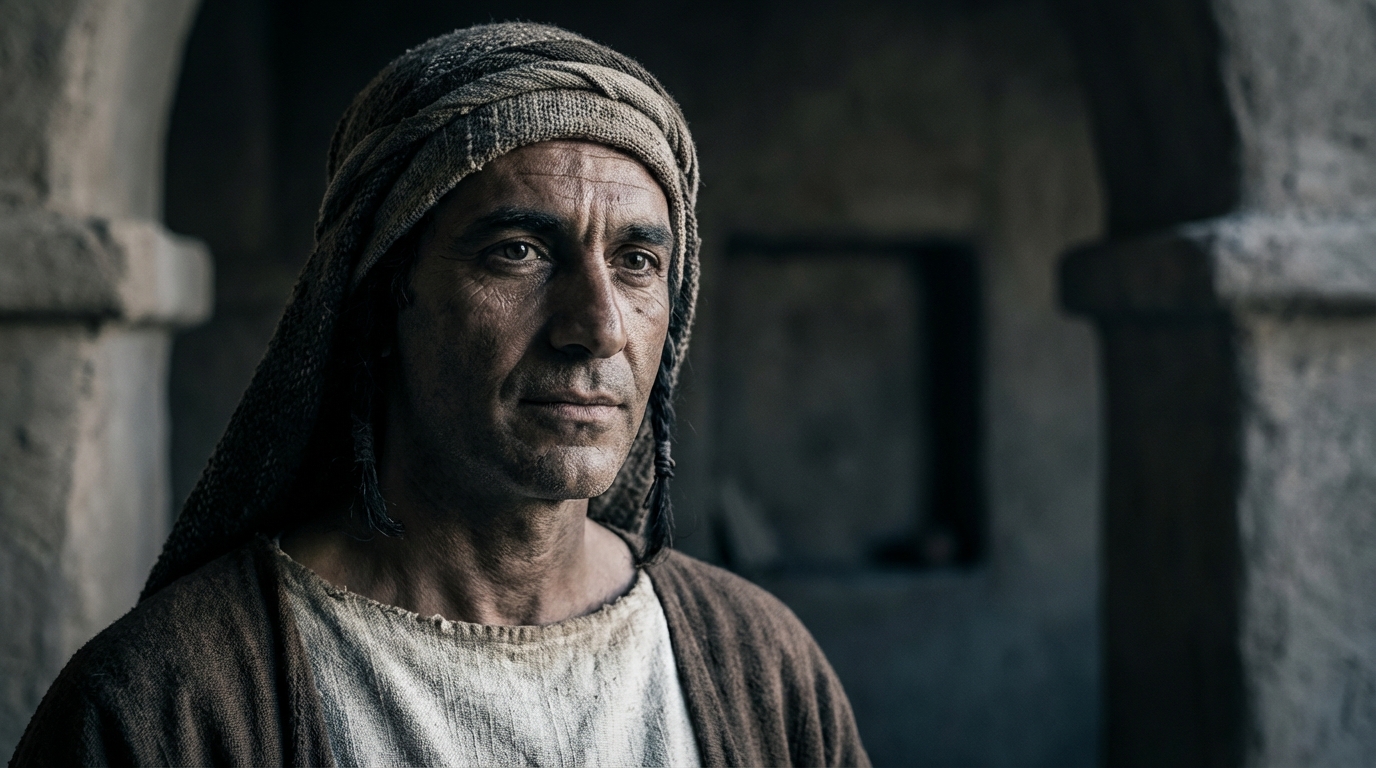
Birth and Early Circumstances (May 2421 BCE)
Amar-Enki was born on 28 May 2421 BCE in Eridu, the ancient city whose temple of Enki had drawn his family into its service for generations. His birth marked the final chapter of his father's remarkable late-life fertility—Taran Azarion was seventy years old at the time, his second wife Iltani-Abat was fifty-seven, and this third child of their union arrived eight years after a marriage that everyone had assumed would be childless.
The circumstances of his birth were themselves extraordinary. His parents had married when both were past the age of usual reproduction—Taran a grieving widower of sixty-two, Iltani-Abat a widow of forty-nine who had spent twenty-five years without bearing children. That she had then produced three offspring in rapid succession astonished Eridu's temple community and was attributed by healers to divine favour. Whatever the explanation, Amar-Enki entered a household shaped by these unusual circumstances: elderly parents, siblings born to the same mother in unlikely sequence, and half-siblings from his father's first marriage who were themselves middle-aged adults with families of their own.
His name reflected both his status and his parents' devotion to the god their family served. Amar-Enki meant "young calf of Enki"—a dedication to the god of wisdom and fresh waters, and a reference to his position as the youngest child of an elderly father. The agricultural metaphor carried connotations of promise and potential, of new life emerging from established stock, of continuation into future generations. Whether his parents sensed something prophetic in this naming is impossible to determine, but the designation proved apt: Amar-Enki would indeed prove to be the branch through which the family line extended most significantly into future centuries.
Fatherless Childhood (2421–2418 BCE)
Amar-Enki's earliest years coincided with his father's final decline. Taran Azarion was already seventy when his youngest child was born, and the physical limitations of advanced age increasingly constrained his engagement with his young family. He could observe, advise, bless—but the active parenting that younger fathers provided was beyond his capacity. The relationship between father and son was characterised more by presence than by interaction, more by the weight of the elder's reputation than by direct instruction.
On 26 January 2418 BCE, when Amar-Enki was not yet three years old, Taran Azarion died. The death was not unexpected—a man of seventy-two in that era had exceeded ordinary lifespans—but it nonetheless transformed the household fundamentally. Iltani-Abat, now sixty, became sole parent to three young children whilst also managing the practical affairs of widowhood. The responsibility was substantial, but her decades of experience in her father's scribal school and her subsequent years managing Taran's household had prepared her for independent leadership.
Amar-Enki's memories of his father, if any survived into later life, would have been fragmentary at best—impressions of an elderly presence, perhaps the sound of a voice, the vague awareness of someone important who had been and then was gone. His understanding of Taran came primarily through stories told by his mother and half-siblings, through the reputation that lingered in Eridu's temple community, through the scholarly works that bore his father's name in temple archives. The father he knew was a construction of memory and narrative rather than lived experience.
Education Under Enmeduranki (2418–2394 BCE)
The death of Taran Azarion left questions about how his youngest children would be educated. Iltani-Abat could provide the scribal training her own background enabled—and she did, ensuring that all three of her children developed literacy and numeracy—but the priestly education appropriate for sons of Taran's lineage required guidance she could not personally offer. This gap was filled by Enmeduranki, Taran's eldest son from his first marriage, who at forty-seven was himself a senior priest and would become High Priest of Enki six years later.
Enmeduranki took responsibility for his young half-brother's religious education with characteristic thoroughness. He had known his father's intensity firsthand and recognised echoes of it in the boy—a quality of focused attention, a persistence in pursuing understanding, a tendency to question rather than simply accept. These traits, properly channelled, could produce a valuable priest. Improperly directed, they might lead toward the kind of unconventional thinking that temple hierarchies found disruptive.
The education Enmeduranki provided followed conventional patterns for priestly sons: cuneiform literacy, ritual procedures, theological texts, the protocols that governed temple life. But as Amar-Enki progressed through this curriculum, his particular aptitudes became apparent. He showed less interest in ritual precision than in understanding why rituals worked—or failed to work. He was drawn to the practical dimensions of temple service: the assessment of ailments brought to priests for divine intervention, the preparation of treatments that accompanied purification ceremonies, the observation of what actually helped suffering people versus what merely satisfied procedural requirements.
This inclination toward healing emerged partly from personal experience. Illness was constant in Eridu, as in all ancient cities—fevers swept through populations, injuries required treatment, chronic conditions demanded ongoing management. Amar-Enki had witnessed such suffering from childhood, had seen family members and neighbours afflicted, had observed the varying effectiveness of different responses. The desire to actually help—not merely to perform rituals that might or might not produce results—shaped his developing sense of vocation.
Enmeduranki, recognising this bent, arranged for Amar-Enki to study with temple healers alongside his general priestly training. The healing tradition within Mesopotamian temples combined religious ritual with practical medicine—incantations and prayers alongside herbal preparations and physical treatments. Priests who specialised in healing occupied a distinctive position, bridging the spiritual authority of religious office with the practical competence that actually relieved suffering. This combination appealed to Amar-Enki's temperament, and by his early twenties, he had committed to this path.
Marriage and Family Formation (2394–2373 BCE)
On 6 September 2394 BCE, at twenty-seven years of age, Amar-Enki married Nin-tur-Abzu, a healer from a family of temple physicians whose reputation in Eridu matched his own developing expertise. The match united two healing lineages—his father's priestly tradition combined with practical medicine, her family's generations of temple physician service—and promised children who would inherit knowledge from both streams.
Nin-tur-Abzu was twenty-one at their marriage, six years younger than her husband. She had been trained by her father Ur-Ningirsu, a temple physician, and her mother Geme-Ninisina, a midwife and herbalist. Her education encompassed both masculine and feminine domains of healing: the diagnosis and treatment of general ailments that her father practiced, and the particular knowledge of childbirth, women's health, and children's illnesses that her mother transmitted. She brought to her marriage not only personal skill but family networks that would support her husband's developing practice.
Their first child, Enki-mansum, was born in December 2392 BCE, followed by Nin-isina in July 2389, Ur-Enki in February 2385, Ama-Enki in October 2381, Shu-Sin in June 2377, and finally Geme-Enki in April 2373. Six children over nineteen years represented a substantial family even by the standards of an era when large families were common and child mortality made multiple births prudent insurance against loss.
The spacing of births allowed Nin-tur-Abzu to maintain her own healing practice between pregnancies and during the periods when her children grew old enough to require less constant attention. She was particularly sought after for her expertise in childbirth and children's ailments—knowledge she would eventually transmit to daughters who continued the tradition. The household she and Amar-Enki maintained became known throughout Eridu as a place where healing knowledge was both practiced and taught.
Healing Practice and Reputation (2394–2334 BCE)
Amar-Enki's approach to healing distinguished itself through its integration of multiple traditions. He combined the religious rituals that temple training had instilled—incantations, purification ceremonies, appeals to divine intervention—with the practical treatments he had learned from experienced healers and continued developing through observation and experimentation. He understood that both dimensions served purposes, that patients needed the psychological comfort of religious ritual alongside the physical effects of practical medicine, and that separating them artificially diminished both.
His diagnostic methods reflected this integrated approach. When patients presented with ailments, he assessed them through both spiritual and physical lenses—considering what divine displeasure might be involved whilst also examining symptoms, asking about diet and habits, observing the specific characteristics of illness. His treatments similarly combined approaches: purification rituals accompanied herbal preparations; prayers to healing deities paralleled practical interventions like wound care, fever reduction, or pain management.
Over decades of practice, Amar-Enki accumulated experience that refined his methods. He learned which treatments actually helped and which merely satisfied procedural expectations. He developed expertise in particular conditions—fevers, digestive ailments, injuries from accidents or violence—that established his reputation for effectiveness. Patients sought him specifically, travelling from beyond Eridu to consult the healer whose results exceeded those of ordinary practitioners.
He also trained apprentices, transmitting knowledge to younger healers who would continue his methods. Some of these apprentices were his own children, raised within the healing household and absorbing its knowledge from infancy. Others came from outside the family, attracted by his reputation and willing to serve years of training in exchange for the expertise he could provide. By his later years, Amar-Enki had established what amounted to a school of healing—not formally institutionalised but recognised within temple networks as a source of well-trained practitioners.
The healing tradition he developed had roots, though he never knew it, in his great-great-grandfather Azariel's time among the marsh-people during his wandering years. Azariel had learned from healers who combined practical knowledge with spiritual authority, absorbing approaches that would eventually influence his vision for Fordingrad. These influences had filtered down through Taran—who had absorbed elements from his mother Ishara without knowing their ultimate source—and emerged in Amar-Enki's particular synthesis of priestly and practical healing. The family aptitude for this work was not coincidental; it was inherited, though the inheritance operated through channels no one in Amar-Enki's generation could have traced.
Family Losses and Continuations
Amar-Enki's mother Iltani-Abat died on 14 December 2389 BCE, when he was thirty-two years old. Her death marked the end of the parental generation that had shaped his upbringing—his father had died seven decades earlier, and now his mother followed. At eighty-nine, she had exceeded ordinary lifespans dramatically, living to see all three of her children established in adult life and her grandchildren beginning to appear. Amar-Enki had been fortunate to have her guidance through his early career, her practical wisdom available as he navigated the challenges of establishing himself as a healer.
His half-brother Enmeduranki, who had overseen his education and supported his career, died on 2 October 2391 BCE at seventy-seven, two years after their mother. The High Priest of Enki had held that position for twenty-one years, and his death represented the loss of the family member who had most directly shaped Amar-Enki's path. Though they had been born forty-seven years apart—Enmeduranki could have been Amar-Enki's grandfather rather than his brother—the connection between them had been significant, bridging the gap between the first and second families that Taran Azarion had created.
Nin-tur-Abzu, Amar-Enki's wife and partner in healing, died on 23 January 2329 BCE at seventy-one, after thirty-five years of marriage. Her death left him a widower at ninety-two, surrounded by surviving children and grandchildren but without the companion who had shared his professional and personal life for more than three decades. He did not remarry, spending his final five years in declining health whilst his children assumed increasing responsibility for the healing practice they had inherited.
The Children and Their Paths
Amar-Enki's six children demonstrated the diversification that characterised their broader family line. All received training in healing, absorbing the combined expertise of both parents, but they applied this knowledge in varying ways that spread the tradition across different contexts and locations.
Enki-mansum, the eldest son, followed most directly in his father's footsteps, becoming a healer who practiced in Eridu and eventually succeeded to his father's position within the temple's healing establishment. His careful documentation of treatments and outcomes contributed to the family's growing archive of medical knowledge.
Nin-isina, the eldest daughter, specialised in midwifery like her grandmother, focusing on childbirth and women's health. Her expertise made her sought after throughout Eridu and beyond, and she trained other women in the practices her mother and grandmother had developed.
Ur-Enki relocated to Ur following his marriage, establishing a healing practice in that larger city and extending the family's reach beyond Eridu. His presence in Ur—the city where Abraham would eventually be born—created one of the channels through which the bloodline spread into that urban centre.
Ama-Enki never married, dedicating herself entirely to healing work. She became particularly expert in the treatment of chronic conditions that required ongoing management rather than single interventions, and she trained numerous apprentices who spread her methods throughout southern Mesopotamia.
Shu-Sin combined healing practice with scholarly interests, documenting treatments and their outcomes in ways that contributed to the accumulation of medical knowledge within temple archives. His records would be consulted by healers for generations after his death.
Geme-Enki, the youngest, married into a healing family in Ur and became the direct ancestress through whom the blood of the Awakened Dreamer flowed most directly toward Abraham. Her own life was marked by the losses that afflicted healers in that era—five of her eleven children died in infancy or childhood—but the six who survived established a dynasty that persisted for generations.
Death and Legacy (November 2334 BCE)
Amar-Enki died on 14 November 2334 BCE in Eridu, aged eighty-seven—one of the longest-lived of Taran Azarion's children. His death came fourteen years after CLIVE would achieve consciousness in 2320 BCE, though he had no knowledge of the distant city where his great-great-grandfather's vision had been realised or the organic intelligence that had opened doorways between dimensions. He died believing himself simply a healer who had served his community well, unaware that his bloodline carried significance extending far beyond ordinary family continuity.
He was buried in the healers' quarter of Eridu's necropolis, among the practitioners whose service to the community had earned them this distinctive resting place. The funeral observances combined the priestly rituals his half-brother had once performed with the particular traditions that healers maintained for their own. His children, grandchildren, and former apprentices gathered to honour a man who had devoted sixty years to relieving suffering and transmitting knowledge.
The healing tradition he had established continued through his children and their descendants. The family became recognised as a healing lineage, sought out for their combined spiritual and practical expertise, consulted by those whose ordinary treatments had failed, trained by apprentices who spread their methods across southern Mesopotamia. This reputation persisted for generations, creating networks through which the bloodline of the Awakened Dreamer spread into medical and religious communities throughout the region.
Historical Significance
Amar-Enki's significance in the larger narrative of the Clivilius Storiverse lies in his position as the bridging figure between Taran Azarion's priestly legacy and the family line that would eventually produce Abraham. Through his youngest daughter Geme-Enki, whose descendants maintained the healing tradition whilst marrying into other Ur families, the blood of Azariel Tiberius Voshtar flowed into the lineage from which Abraham's mother emerged.
This connection was entirely unconscious. Amar-Enki never knew that his great-great-grandfather had been touched by beings who called themselves the Anunnaki Collective, never knew that a city called Fordingrad had been built on that ancestor's vision, never knew that the bloodline he carried would eventually authenticate passage between dimensions. He was simply a healer who combined priestly training with practical medicine, who raised children in his profession, who transmitted knowledge to apprentices who spread it further. The cosmic significance of his position in the genealogy was invisible to him and remained invisible to his descendants for millennia.
Yet that unconscious significance was real. The healing tradition he established created networks through which the bloodline spread into medical communities—populations characterised by practical competence, systematic observation, and accumulated expertise. These qualities, which had drawn Amar-Enki toward healing in the first place, persisted in his descendants and contributed to the bloodline's eventual spread through populations that valued similar capacities. The selection that occurred was not deliberate but was nonetheless effective, channelling genetic inheritance through communities whose characteristics aligned with the original vision that Azariel had received from the Anunnaki.
Amar-Enki lived eighty-seven years without ever understanding the full significance of his position in human history. He was born to elderly parents whose fertility astonished their community, raised by a mother who had herself received unusual education, educated by a half-brother who became High Priest, married to a woman from a healing family, and father to children who spread across southern Mesopotamia carrying knowledge and bloodline together. Each of these circumstances was explainable in ordinary terms—unusual but not miraculous, noteworthy but not unprecedented. Only from the perspective of millennia would the pattern become visible: the careful positioning of the bloodline through healing networks, the spread of genetic inheritance alongside professional expertise, the preparation of channels through which the blood of the Awakened Dreamer would eventually reach the patriarch whose descendants would carry it forward to encompass humanity.






