Aldo Mattias Heikki
Aldo Mattias Heikki was born on 15 March 1992 in Oulu, Finland, the son of master builder Kalle Heikki and teacher Sari Heikki (née Koivunen). Trained in his family's construction firm, he married artist and cook Leena Mäkinen in 2017. After his father's death left the firm in debt, he took a Killerton contract that brought him to Bixbus, Clivilius, in 2018, where he helped build The Arlington, raised his son Aukusti, and became one of the city's respected subcontractors.
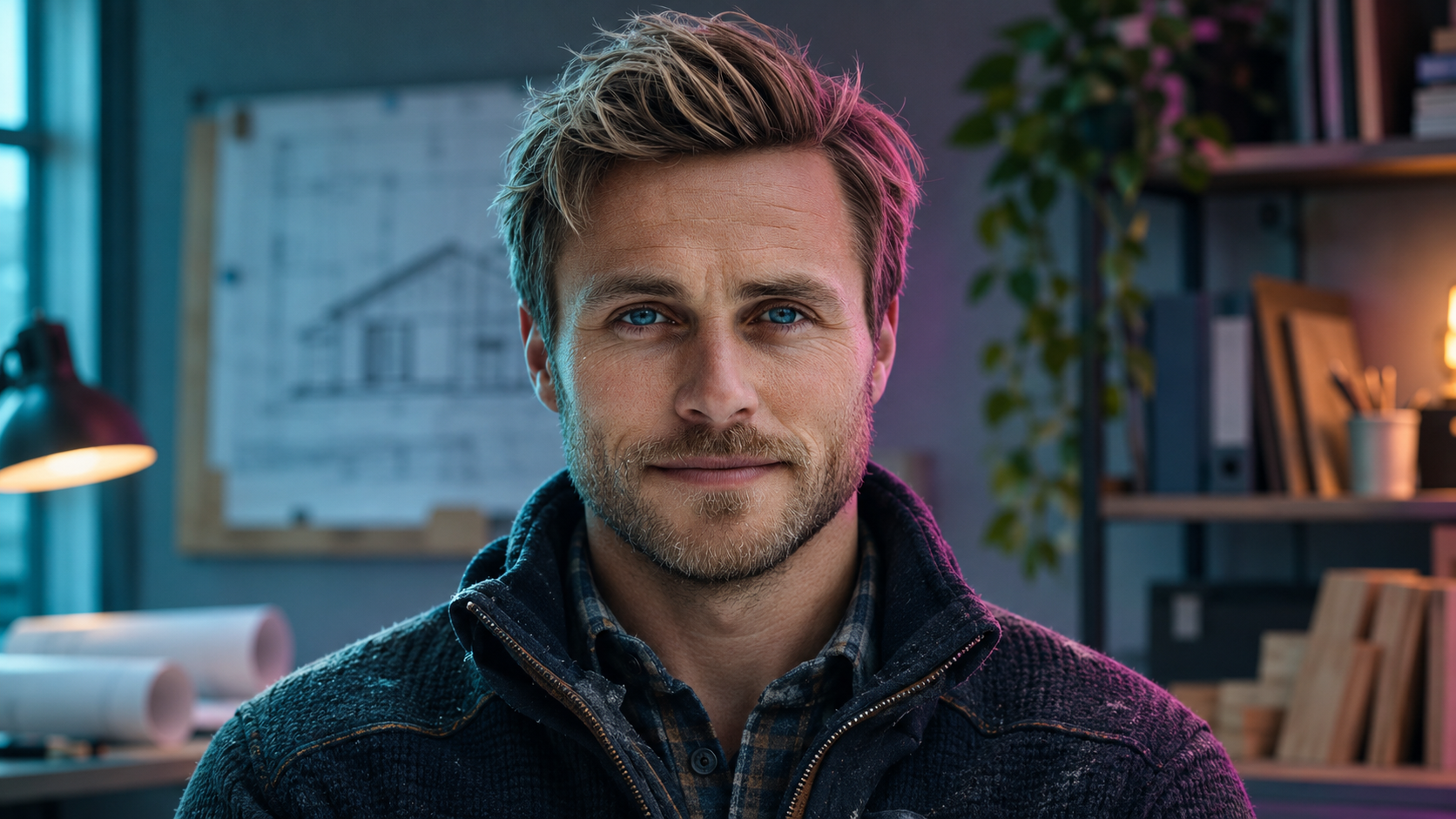
A Builder's Son in Oulu
Aldo Mattias Heikki was born at 04:17 on the morning of 15 March 1992 at Oulu University Hospital, the first child of Kalle Juhani Heikki and Sari Anneli Heikki (née Koivunen). The delivery, attended by Dr Petteri Salonen and midwife Katja Räsänen, was straightforward. His father was thirty-three and already running the construction firm his own father had built; his mother, a schoolteacher from Kuusamo, was thirty-one and had married into the Heikki family with her eyes open about what it would ask of her.
Kalle, born on 15 August 1958, was a master builder of the old school—courteous, reserved, and convinced that a man's work should speak for him because he had no intention of doing so himself. Heikki Construction had been founded by his father, Aarne Matti Heikki, born on 28 March 1932, a carpenter's son who had spent the post-war decades rebuilding houses, schools, and churches across Northern Finland. By the time Aldo was born, the firm employed some thirty people and had a reputation in Oulu for work that was slow, expensive, and very rarely needed fixing.
Sari, born on 27 May 1960, taught at a primary school on the city's eastern side and brought to the household a briskness and a love of books that Kalle respected without entirely sharing. The family lived in a timber house in the Hiukkavaara district that Aarne and Kalle had built together in the early 1980s, and which Aldo would later describe as the first building he ever understood.
His sister, Ella Krista Heikki, was born at 15:42 on 7 September 1996, when Aldo was four. He was taken to the hospital to meet her and asked, according to family legend, whether she would be able to hold a hammer. The two grew up close in the way of siblings who disagree about almost everything and defend each other against everyone else.
Sawdust and Silence
Aldo's childhood was shaped by the rhythms of the firm. His weekends and school holidays were spent on building sites, first trailing after his father and later after his grandfather, who had more patience and more time. Aarne taught him to read timber by its grain and smell, to judge a joint by running a thumb along it, and to understand that a building began long before anyone dug a foundation. Kalle taught him mostly by example, and by silence when something was done badly.
The early 1990s were hard years in Finland, and the depression that followed the collapse of Soviet trade reached Oulu's construction industry with particular force. Heikki Construction lost contracts, shed staff, and survived only because Aarne and Kalle took on small repair jobs they would once have turned away. Aldo was too young to understand much of it, but he remembered his father sitting at the kitchen table late at night with a calculator, and the way conversations stopped when he came into the room.
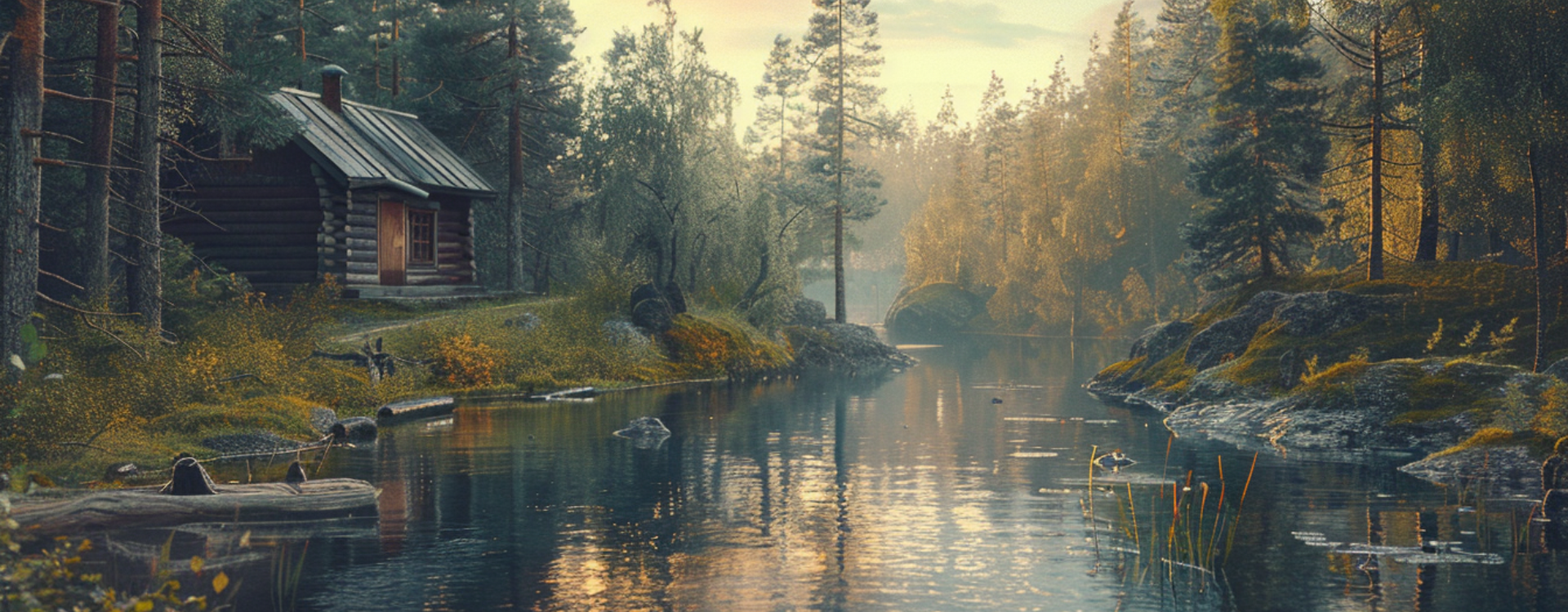
He was a quiet, watchful boy, more comfortable with his hands than with other children. At school he was strong in mathematics and technical drawing and indifferent to almost everything else. He had a small number of close friends, most of them from families in the building trades, and he spent long summers at his grandparents' cottage on a lake near Pudasjärvi, where Aarne let him help repair the jetty, the sauna, and the boathouse year after year.
Ella, by contrast, was loud, quick, and fearless, and from an early age she argued with her father in ways that Aldo never dared. She was drawn to the design side of building rather than the making, and their arguments as teenagers—over whether a house should be built to last or to delight—became a family set piece. Kalle listened to both of them and rarely took sides.
Apprentice to the Family
At sixteen, Aldo left general schooling for a vocational programme in construction at the Oulu Vocational College, combining classroom study of building technology with placements on site. In 2008 he began a formal apprenticeship with Heikki Construction under his father, and over the following four years he worked his way through every trade the firm practised: carpentry, framing, roofing, finishing, and eventually the planning and scheduling that Kalle regarded as the real work of a builder.
The apprenticeship was not easy. Kalle held his son to a standard he applied to no one else, and the older tradesmen on the firm's crews watched the boss's son closely for any sign of favouritism. Aldo responded by working longer hours than anyone and saying almost nothing. By twenty he had a reputation for reliability and an early, persistent pain in his lower back that he told no one about for two years.
He completed his apprenticeship in 2012 and stayed on with the firm as a site supervisor. He also began, in his early twenties, to suffer from bouts of anxiety that he did not have a name for at the time—sleepless weeks before large projects began, a tightness in the chest when schedules slipped, a habit of checking and rechecking work that was already finished. He dealt with it the way his father dealt with most things: by working harder and talking less.
The Farmhouse in Tuscany
Between 2012 and 2016, Aldo took on increasing responsibility within the firm, supervising residential renovations around Oulu and a run of restoration projects on older public buildings in Northern Finland. He developed a particular interest in the problem of bringing old structures up to modern standards without destroying what made them worth saving, and in the spring of 2016 he took several months away from the firm to study traditional restoration techniques on a centuries-old farmhouse outside Montepulciano in Tuscany.
It was there, in a village café one wet afternoon, that he met Leena Kristiina Mäkinen, a cook and artist from Helsinki working a seasonal job at a nearby agriturismo. She talked more in an hour than he usually did in a week, and he found himself unable to leave. They spoke English for most of that first conversation and discovered only after an hour that they were both Finnish, a fact that Leena found hilarious and Aldo found faintly embarrassing.
The attraction surprised them both. Leena was restless, expressive, and allergic to plans; Aldo was methodical, quiet, and happiest with a schedule. They spent the rest of the season together, and when Aldo returned to Oulu at the end of the summer, he was already making arrangements to see her again.
A Wife and a Firm
Leena and Aldo returned to Finland together in early 2017 and married that summer in a small ceremony beside a lake outside Oulu, with Leena's family travelling north for the occasion and Leena herself cooking most of the reception. The Heikki family welcomed her warmly if cautiously. Kalle regarded his son's artistic wife as an interesting puzzle; Aarne had died on 14 September 2015 and did not see the wedding, which Aldo felt more than he said.
The couple settled in Oulu, where Leena struggled to find her footing in a smaller, quieter city and Aldo worked longer hours than ever. Their differences produced friction as often as delight. Leena accused him of hiding in his work; he accused her, less often and more quietly, of never finishing anything. They were, by most accounts, happy, and both of them knew that it would take effort to stay that way.
Kalle Juhani Heikki died on 4 May 2018, at the age of fifty-nine. His death left Aldo grieving and responsible at the same time. Within weeks it became clear that the firm was in worse condition than anyone outside Kalle's office had known: clients had drifted, two large payments were long overdue, and debts surfaced that Kalle had never mentioned to his wife or his children. Aldo, as the only family member in the business, inherited the problem. He spent the summer of 2018 trying to keep the firm afloat and sleeping very little.
A Contract Without a Map
In the late summer of 2018, Aldo accepted a subcontracting position with Killerton Enterprises on what was described to him as a large residential development at a remote site. The pay was considerably better than anything available in Northern Finland, and Heikki Construction needed it. The details of the location were vague in ways he noticed at the time and talked himself out of noticing. He departed in late September, leaving the firm in the hands of its longest-serving foreman, Veikko Laakso, and stepped through into Bixbus.
The shock of what he found was considerable, and Aldo dealt with it the only way he knew: by going to work. He was at The Arlington's temporary site office by 2 October 2018, when its administrative systems came online and the project's first official meeting was held. His proposed construction schedule set off an immediate argument over sequencing that ran for most of the morning. He conceded some points, refused others, and earned in the process a reputation among the project team as a man who was difficult to move once he had made up his mind.
Within weeks he faced a decision he would never fully settle with himself. He could not easily return to Finland, and he did not want to remain in Bixbus without his wife. In November 2018 Leena followed him through. What he told her before she crossed, and what he chose not to tell her, became one of the few subjects the two of them could not discuss calmly. Aldo believed he had told her enough. Leena believed he had told her what he thought she would accept. Both of them were partly right.
The Arlington
Aldo was one of the project's two schedulers, alongside Natasha Volkov, and his work on The Arlington ran from the first week of October 2018 to the summer of 2019. The programme he helped to build was relentless: three eight-hour shifts around the clock, steel rising two floors a week on each tower, and every trade sequenced so tightly behind the one before that a week's slip anywhere would have been felt everywhere. He worked long shifts at a pace that would have been unthinkable on a Finnish site, with materials arriving through the portal in volumes he had never seen and crews drawn from a dozen countries and almost as many building traditions.
Tower A topped out on 5 March 2019 and Tower B on 27 March. The first residents moved into Tower A on 1 July, and the project was declared complete on 21 August 2019, eight weeks ahead of the schedule Aldo had fought for on his first morning in the site office. He was proud of the building in a way he did not express, and privately astonished that a schedule so many people had called impossible had been beaten. He went straight on to the next residential project, and then the next.
The firm he had left behind did not survive his absence. Unable to manage its debts without him, Heikki Construction was sold to Veikko Laakso in the autumn of 2019 for considerably less than it was worth. Aldo agreed to the sale through a series of messages carried through the portal and never quite forgave himself for it. Two months later, on 21 November 2019, his grandmother, Liisa Marjatta Heikki (née Rantala), died in Oulu at the age of eighty-five. He could not return for her funeral. Leena noticed that he stopped talking about Finland for some weeks afterwards.
Fatherhood
Leena was by then pregnant with their first child. Aukusti Mikael Heikki was born at 09:46 on 4 April 2020 at the Royal Bixbus Hospital, one of the first births in its new maternity unit. Aldo was the only family in the room. He stood at the bedside throughout the long labour, gripping the bed rail more than his wife's hand, and when his son was born he touched the blanket before he touched the child and did not speak for several minutes.
He chose the boy's middle name himself, after his grandfather's brother Mikael, a carpenter who had taught Kalle to read a set of plans. He did not explain the choice to Leena until some weeks later. The first year was hard. Aukusti was colicky and slept badly, and Aldo, who was working on The Gardenia Residences at the time, arrived on site most mornings after a night of walking his son through the corridors of their block. His colleagues noticed that he looked older than he had a year before.
He was, by any measure, a devoted father, though not always a demonstrative one. He built Aukusti a small wooden workbench before the boy could walk, and talked to him across it at greater length than he talked to almost anyone else—about joints, grain, load, and why some things held and others did not. It was the kind of attention Aldo had received from his grandfather rather than his father, and he was aware of the difference.
Building a City
As Bixbus grew from a settlement into a city, Aldo's work grew with it. By 2022 he was running his own crew of tradespeople on residential developments across the settlement, and had become one of the more respected subcontractors in a city that was being built faster than anyone could keep up with. He took on apprentices from among the settlement's younger arrivals and trained them the way Aarne had trained him, with more patience than Kalle had ever shown.
In 2023 the family moved out of the prefabricated block set aside for Killerton's subcontractors and into a modest apartment in one of the newer developments Aldo had helped to build. The following year he built a small sauna behind the block from salvaged timber and a stove brought through the portal—barely large enough for three people, and tolerated by the building's management only after he promised not to light it in the hottest months. It was the first thing in Bixbus that he had built entirely for himself.
His relationship with Leena remained close and occasionally difficult. Her work running the Bixbus Event Collective kept her busy in the evenings when he was home, and his long days on site kept him away when she was. They argued about time, about money, and about how to answer their son's questions about Finland. They did not argue about whether they would stay.
In 2025 the anxiety and back pain that had troubled him in his twenties returned under the strain of long hours and an ever-expanding workload. For several months he spent most evenings lying flat on the living-room floor with his eyes closed, and Aukusti took to bringing him tools from his workbench and offering to fix his back. Aldo let him try every time. With Leena's prodding, he cut his hours, hired a second foreman, and began, for the first time in his life, to take whole weekends off.
By 2026 Aldo was thirty-four, the father of a six-year-old, and a builder in a city that had not existed when he turned twenty-six. He spoke to his mother and sister on Earth only through occasional recorded messages, and he still thought often of the firm he had lost and the funerals he had missed. But on the evenings when the sauna was lit and his son sat on the lowest bench, solemn and red-faced, he was as close to content as he had ever been.